
Drywall Contractor Insurance by State
Washington Drywall Contractor Insurance
Washington registers drywall firms under a specialty of their own, runs its own lead renovation program, names wallboard in its asbestos rule and sells crew coverage only through the state.
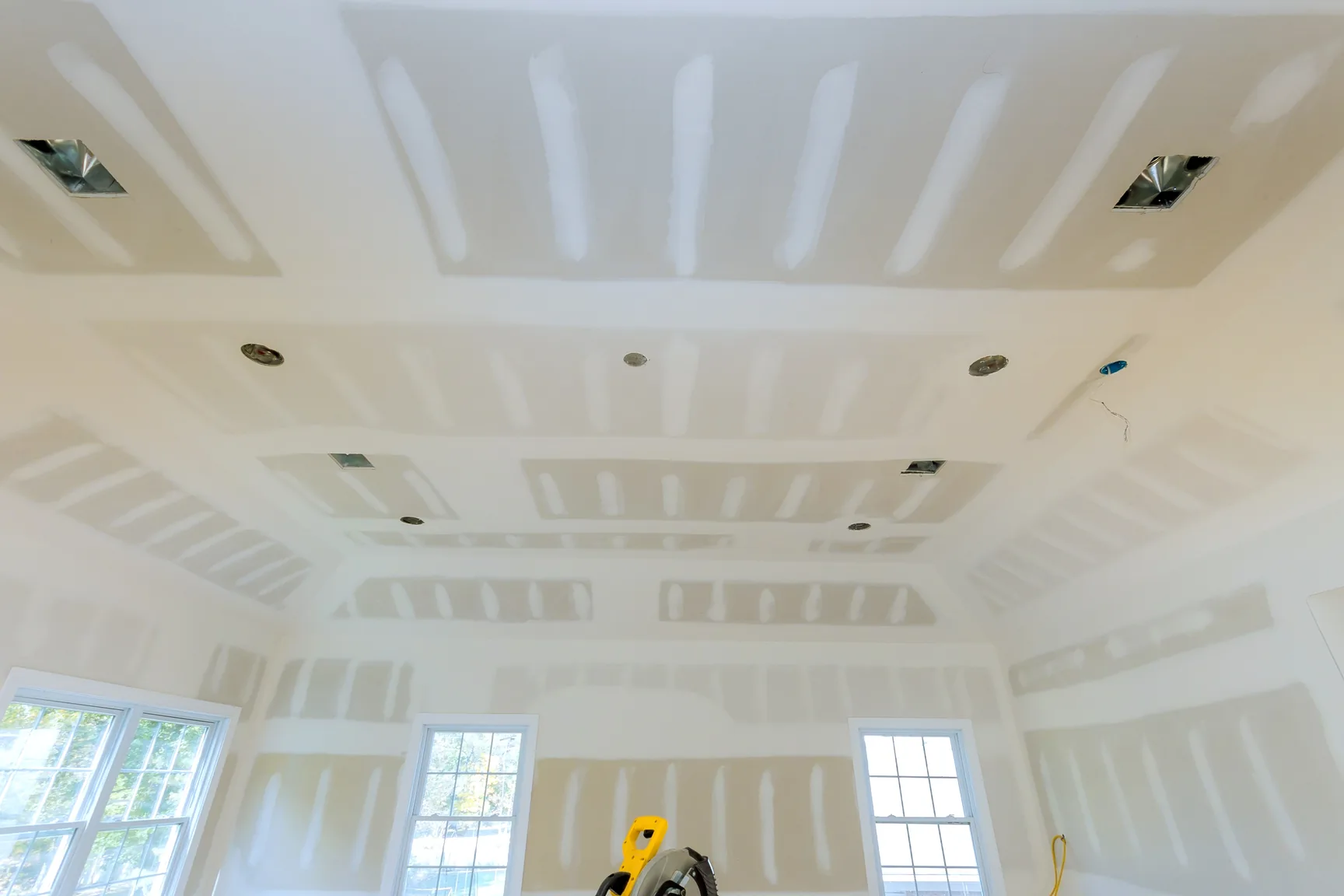
The same state department registers a Washington drywall firm, certifies the people who may remove asbestos from its walls and ceilings, and insures its crew. That department is the Washington State Department of Labor & Industries. Before a firm bids, it registers there, and the department’s rule gives drywall a specialty classification of its own. Before the crew opens a wall that may hold asbestos, the building owner owes a good faith inspection under the department’s rule. And because Washington does not allow private workers’ compensation coverage, the crew’s coverage is bought from the department’s state fund unless the employer qualifies as a self-insurer. Lead is the exception: Washington runs its own lead renovation program, and the Washington State Department of Commerce certifies the firm.
The policies a drywall business carries wherever it works are described on the drywall contractor insurance page, with repair work in occupied homes on the residential drywall contractor insurance page and builders’ projects on the commercial drywall contractor insurance page. This page stays with what Washington adds, in the law’s own words where they decide the point.
A stack of layers, read from top to bottom. At the top is contractor registration with the labor department, which every construction contractor needs before bidding, advertising or working, and whose Drywall specialty describes board, framing members, taping and texture. Below it is the specialty’s limit: a firm registered as a specialty contractor works only inside that specialty. Next is the state’s own lead renovation certificate, issued by the commerce department to the firm, with a renovator certified elsewhere registering that certificate with the same department. Below that is the building owner’s good faith asbestos inspection, done before renovation or repair, under a rule that names wallboard and acoustical plaster on ceilings. Next come certified asbestos workers under a certified supervisor, working for a contractor holding the department’s certificate, and the carve-out for people working on their own homes does not reach a hired firm. At the bottom is the crew’s workers’ compensation, bought from the state fund run by the labor department unless the employer is a certified self-insurer, with no private policy allowed. No figures are shown.
Registering under the Drywall specialty before a bid goes out
Washington requires every construction contractor to register with the Department of Labor and Industries, and drywall work is one of the department’s specialty contractor classifications. The rule’s Drywall specialty covers laying out and installing gypsum wall board and its assemblies, including nonstructural metal framing, the taping, primer and texturing work, and interior lath and plaster repair. It is a registration, not a license by examination.
A drywall firm registers before it bids, advertises or works, either as a specialty contractor in the Drywall classification or as a general contractor; a specialty contractor works only in the specialty it is registered in. Working as a contractor without registering is a gross misdemeanor under the registration law.
Authority: RCW 18.27.010(2), (5), (12); RCW 18.27.020(1), (2)(a); WAC 296-200A-016(15)
The registration law opens the point in a single sentence:
“Every contractor shall register with the department.”
Offering work and submitting a bid sit in the same sentence of the penalty clause as doing it; the part kept below is the part about the work:
“It is a gross misdemeanor for any contractor to: … perform any work as a contractor without being registered as required by this chapter”
A specialty contractor is defined by what it is not:
“"Specialty contractor" means a contractor whose operations do not fall within the definition of "general contractor".”
The department’s rule is where drywall gets its name. Its list of specialty classifications, written for registration only, gives the trade a heading of its own and describes it in terms a finisher would recognize:
“A contractor in this specialty lays out and installs gypsum wall board and gypsum wall board assemblies including nonstructural metal framing members, and performs the taping, primer and texturing operations …”
“Includes interior lath and plaster repair.”
That last line matters to crews that patch older homes. Repairing interior lath and plaster sits inside the Drywall specialty, so a crew that patches a cracked plaster wall before it skims the room is still working within it. The department’s guidance then draws the boundary that comes with choosing a specialty:
“Specialty contractors can only perform work in the specialty they are registered in.”
As advice, a few habits fit a state that registers by specialty:
- Read the Drywall specialty’s words against the jobs you actually take before you file. If your firm regularly sells more than walls and ceilings, ask the department whether the specialty or a general registration fits.
- Register before the estimate goes out, not before the crew shows up. The law’s sentence reaches bidding and advertising, so the order matters.
- Do not read the state registration as the end of the paperwork. Business licensing and permits in a city or county were not researched for this page, so ask the place where the job sits what it expects.
What a general contractor asks to see from a subcontractor before a commercial project, including proof of insurance, is taken up on the commercial drywall contractor insurance page.
No private comp market: the department insures the crew
Washington is monopolistic: every employer under the Industrial Insurance Act must either insure with the state fund, run by the Department of Labor and Industries, or qualify as a self-insurer, and the department’s own page says the state does not allow private workers’ compensation coverage. The Act embraces all employments within the state’s legislative jurisdiction, with a closed list of exclusions that takes in sole proprietors and partners.
Authority: RCW 51.04.010; RCW 51.08.175; RCW 51.12.010; RCW 51.12.020(5); RCW 51.14.010; RCW 51.44.010; RCW 43.17.010
The section that settles the question gives an employer a short list of routes and stops there:
“Every employer under this title shall secure the payment of compensation under this title by:”
“Insuring and keeping insured the payment of such benefits with the state fund; or”
“Qualifying as a self-insurer under this title.”
The insurer on the first route is the state itself. The law defines the fund by the department that runs it:
“The "state of Washington industrial insurance fund" means the department when acting as the agency to insure the industrial insurance obligation of employers.”
The department, the Washington State Department of Labor & Industries, says the rest in plain terms on its own page. This is the department’s guidance, and it closes the door the statute leaves unmentioned:
“Washington State does not allow private workers' compensation coverage.”
“You must purchase your coverage from L&I or be a certified self-insured employer”
The reach of the law is broad, and its list of exclusions is closed:
“The following are the only employments which shall not be included within the mandatory coverage of this title:”
Construction work for an employer is not on that list. Owners of the business can be:
“Sole proprietors or partners.”
The panel lower on this page reads «Bought from the state fund, or self-insured with the state’s approval» for Washington. Certified self-insurance is a status the employer qualifies for, not a policy anyone sells. That is why this page does not offer Washington workers’ compensation from us, and why the advice below is about the department rather than about a quote:
- Open the employer account with the Washington State Department of Labor & Industries before the crew’s first job, and keep its paperwork with the registration file.
- Ask your agent whether your program needs employer’s liability coverage for the Washington payroll, the coverage often called stop gap. How it fits beside the state’s coverage is a question to settle before a claim, and the workers’ compensation page explains what employer’s liability is in a standard policy.
- Settle how each hanger and taper is engaged and paid before the department asks. The workers’ compensation page takes up crews paid by the board or the piece.
Washington’s own renovation certificate for opening painted walls
Washington runs its own lead renovation, repair and painting (RRP) program through the Department of Commerce, and EPA lists Washington among the states whose own program governs contractor certification. State law requires renovation on older homes and child-occupied facilities to be done by certified renovation firms using certified renovators, and no firm may perform renovation activities without the department’s certification.
A drywall firm that cuts into, patches or sands painted walls in an older home or child-occupied facility needs Washington firm certification from the Department of Commerce and a certified renovator on the job; a renovator certified by EPA or another authorized state registers that certification with Commerce rather than relying on it alone.
Authority: RCW 70A.420.020(11); RCW 70A.420.080(2); RCW 70A.420.100; WAC 365-230-360; WAC 365-230-380
A crew that cuts out a stained section, opens a wall for a new doorway or sands a patch into an old finish is disturbing whatever paint is there. The state statute sets the program’s rule for that kind of work:
“The state renovation, repair, and painting program requires that all renovation activities on pre-1978 residential or child-occupied facilities must be performed by certified renovation firms utilizing certified renovators or individuals trained by certified renovators”
It then makes certification a condition of the work, and names the department that issues it:
“No individual or firm can perform, offer, or claim to perform lead-based paint activities or renovation activities without certification from the department to conduct these activities.”
The Washington State Department of Commerce is that department, and its page answers the question a crew trained elsewhere will ask. This is the department’s guidance:
“If you have RRP certification from the EPA or another authorized state, you must apply for Individual RRP Application for Registration of Renovator Certification”
The federal agency’s firm certification page lists Washington among the states whose own program applies:
“Contractors working in these states: Alabama, Delaware, Georgia, Iowa, Kansas, Massachusetts, Mississippi, North Carolina, Oklahoma, Oregon, Rhode Island, Utah, Vermont, Washington and Wisconsin …”
As advice, the questions to ask before an estimate on an older home or a child-occupied facility are these:
- When was the building put up? The program turns on its age, so the answer belongs on the estimate sheet.
- Does the firm hold Washington certification, and is the renovator on this job certified or registered with the department?
How a liability policy treats a claim involving lead dust is worked through on the general liability page.
A good faith inspection before the cut, and certified crews for removal
Washington’s asbestos law, run by the Department of Labor and Industries, requires the building owner to have a good faith asbestos inspection done before construction, renovation, remodeling, repair or demolition that could disturb asbestos, and only certified asbestos workers under a certified supervisor may remove or encapsulate it. The department’s asbestos rule names asbestos-containing wallboard as Class II removal work and acoustical plaster on ceilings as surfacing material; it does not name joint compound. Individuals working on their own single-family homes fall outside the owner duties.
Authority: RCW 49.26.013; RCW 49.26.100(9); RCW 49.26.115; RCW 49.26.120(1); WAC 296-62-07703; WAC 296-62-07721(2)(b); WAC 296-62-07722; WAC 296-65-003
The department’s asbestos rule names the material a drywall crew handles most. Wallboard appears in its definition of the removal work that is not insulation or surfacing material:
“Activities involving the removal of ACM which is not thermal system insulation or surfacing material. This includes, but is not limited to, the removal of asbestos-containing wallboard, floor tile and sheeting, roofing and siding shingles, and construction mastics.”
Plaster appears once, in the definition of surfacing material, and the example given is overhead:
“Material that is sprayed, troweled-on or otherwise applied to surfaces (such as acoustical plaster on ceilings and fireproofing materials on structural members, or other materials on surfaces for acoustical, fireproofing, and other purposes).”
What makes a material asbestos-containing is set by the rule’s own definition:
“Any material containing more than 1% asbestos.”
The rule’s own words decide the reach. The department’s asbestos standard names wallboard once, as an example of Class II work, the removal of asbestos-containing material that is not thermal system insulation or surfacing material, and names plaster once, as acoustical plaster on ceilings in its definition of surfacing material. It does not name joint compound, drywall or gypsum; compound and texture on walls are reached only through the general categories of asbestos-containing material and surfacing material. The owner’s good faith inspection duty and the certification rules apply to construction, renovation and repair work on public or private buildings; the law’s definition of an owner leaves out individuals working on their own single-family homes with no commercial use, so a contractor hired to do the work is not excused by that exclusion.
The duty to look comes before the work, and it sits with the building owner:
“Before authorizing or allowing any construction, renovation, remodeling, maintenance, repair, or demolition project, a building/vessel and facility owner or owner's agent must perform, or cause to be performed, a good faith inspection …”
Once asbestos has to come out, the law says who may do it. The firm needs the department’s certificate, and the people doing the work need certification of their own:
“Before working on an asbestos abatement project, a contractor shall obtain an asbestos contractor's certificate from the department”
“No person may … permit any individual or person to remove or encapsulate asbestos in any facility unless performed by a certified asbestos worker …”
The residential carve-out is written into the law’s definition of an owner, and it is narrower than it sounds:
“but does not include individuals who work on asbestos projects on their own single-family residences no part of which is used for any commercial purpose.”
It leaves out the individual working on her own home. It does not excuse a contractor she hires: a hired drywall firm still needs certified asbestos workers, a certified supervisor and the department’s contractor certificate for the removal.
The Washington State Department of Labor & Industries adds guidance on its certification page. What follows is the department’s guidance, not the rule:
“Building owners and construction contractors both share responsibility for asbestos testing when doing work on the building.”
“A good faith inspection for asbestos, performed by an AHERA certified building inspector is required before any remodel, repair, removal, or other work that could disturb suspect materials.”
Notification is a separate step. The Puget Sound Clean Air Agency, a regional clean air agency, asks for it in its own area; its page is guidance, not a statewide rule:
“An Asbestos/Demolition Notification and a filing fee must be submitted to this agency before any asbestos removal or demolition begins.”
As advice, a few habits fit this rule:
- Ask the owner or the general contractor for the good faith inspection before you price the tear-out, and read what it found on the walls and ceilings in your scope.
- If asbestos-containing wallboard or ceiling plaster has to come out and your firm does not hold the department’s certificate, schedule a certified asbestos contractor for that part and bring your crew in after.
- Ask which clean air agency covers the job’s location, and whether a notification has been filed, before any demolition starts.
How a liability policy responds to a claim involving asbestos is taken up on the general liability page.
A department that wears several hats, and the agencies beside it
The Office of the Insurance Commissioner regulates insurance in the state. You can look up an insurance agency’s license, ours included, on NIPR.com.
The other public bodies behind this page are listed below, each linked to the page the record verified and described by the role it found:
- Washington State Department of Labor & Industries: construction contractor registration, including the Drywall specialty classification
- Washington State Department of Labor & Industries: asbestos worker, supervisor and contractor certification, good faith inspection rules and asbestos project notification
- Washington State Department of Labor & Industries: the state fund: employer accounts, premium and claims; the only source of workers’ compensation insurance in Washington, beside certified self-insurance
- Washington State Department of Commerce: the state renovation, repair and painting program and lead-based paint activities certification
- Puget Sound Clean Air Agency: a regional clean air agency: asbestos and demolition notification before asbestos removal or demolition in its area; other parts of the state are served by other clean air agencies or the Department of Ecology (not retrieved)
The same department name repeats on purpose: it is the registrar, the asbestos certifier and the crew’s insurer, each through a different program. As advice, keep each program’s paperwork in its own folder even when the letterhead matches.
The registration travels with the crew into every metro below
The metro areas below are the largest metropolitan areas with a principal city in Washington, as the U.S. Census Bureau delineates them. The state registration applies in each of them alike; local business licensing and permits can differ by county and city, and this page did not research them place by place.
Seattle-Tacoma-Bellevue, WA
The Washington counties in this metro: King County, Pierce County and Snohomish County.
Portland-Vancouver-Hillsboro, OR-WA
This metro crosses the state line, and this card names only its Washington counties: Clark County and Skamania County.
Spokane-Spokane Valley, WA
The Washington counties in this metro: Spokane County and Stevens County.
Kennewick-Richland, WA
The Washington counties in this metro: Benton County and Franklin County.
Olympia-Lacey-Tumwater, WA
The Washington counties in this metro: Thurston County.
Bremerton-Silverdale-Port Orchard, WA
The Washington counties in this metro: Kitsap County.
As advice, when a job sits in a metro that crosses into another state, check which side of the line the address is on before you bid. Washington’s registration, lead certificate and state fund account apply on this side; the other state’s rules apply on the other.
Building the rest of the program around a state-insured crew
The crew’s coverage comes from the state, so it is not a line we place for Washington payroll. The rest of the program is the set of policies a drywall business carries wherever it works, and each has its own page:
- General liability for injury and damage to others, including tear-out and finished work once the room is back in use.
- Commercial auto for the vans and trucks hauling board, mud and lifts between the supply yard and the job.
- Inland marine coverage for tools and equipment for the lifts, stilts, sprayers and sanders that move from job to job.
- Umbrella liability for limits above the primary liability policies, often written into a general contractor’s subcontract.
- Commercial property for the shop and the stock and equipment kept in it.
- Workers’ compensation, read for what employer’s liability is and how the source of crew coverage differs from state to state, not as a Washington line.
Which of those weigh most depends on whether your crews work mostly in occupied homes or on builders’ projects. With the registration filed and the department account open, a quote request is the place to start on the rest.
State rules decide who may do the work and how; the policies decide who pays when something goes wrong.
- A license, registration or certification is a requirement of the state, not insurance.
- In this state, workers’ comp comes from the state fund (or approved self-insurance); we place the rest of your coverage.
A panel for Washington in rows. Each row sets a requirement of the state beside the exposure that requirement leaves open and the coverage line that answers it. Contractor license: A state license or registration reaches drywall work. It leaves open injury and damage to others from the work, during the job and after it, which General Liability answers. Lead-safe renovation: The state runs its own lead-safe renovation program. It leaves open paint dust disturbed when older walls are cut, patched or sanded, which General Liability answers. Asbestos in wall and ceiling material: A state program reaches removal of this material. It leaves open disturbing older joint compound, wallboard or plaster, which General Liability answers. Workers’ compensation: Bought from the state fund, or self-insured with the state’s approval. No connector is drawn for this row. Notes: A license, registration or certification is a requirement of the state, not insurance. In this state, workers’ comp comes from the state fund (or approved self-insurance); we place the rest of your coverage. The conclusion reads: State rules decide who may do the work and how; the policies decide who pays when something goes wrong. No figures are shown.
Washington coverage, services and state offices
What we insure
Coverage lines
Washington drywall contractor insurance questions
We hang board, tape it and spray the texture, and sometimes we fix lath and plaster. Which registration category fits a crew like ours?
The Washington State Department of Labor & Industries’s rule has a Drywall specialty that covers laying out and installing gypsum wall board and its assemblies, including nonstructural metal framing, the taping, primer and texturing work, and interior lath and plaster repair. A firm can also register as a general contractor. As advice, compare the jobs you actually take with the specialty’s words before you file, because a specialty contractor works only in the specialty it is registered in.
Is the drywall registration an exam we have to pass, like a license in some other states?
No. It is a registration with the Washington State Department of Labor & Industries, not a license by examination. The registration law says every contractor shall register with the department, and working as a contractor without registering is a gross misdemeanor under that law. Register before you bid, advertise or start work.
Our lead renovator card came from a federal course. Can our crew use it on an older house in Washington?
Not on its own. Washington runs its own renovation, repair and painting program through the Washington State Department of Commerce, and no firm may perform renovation activities without the department’s certification. The department’s page tells a renovator with certification from EPA or another authorized state to apply to register that certification with the department, and the firm needs its own Washington certification as well.
The general contractor says the owner never had the building checked for asbestos. Can we start cutting out wallboard anyway?
Ask for the inspection first. The Washington State Department of Labor & Industries’s rule says the building owner or the owner’s agent must have a good faith inspection performed before authorizing a construction, renovation, remodeling, maintenance, repair or demolition project, and the department’s guidance says owners and contractors share responsibility for asbestos testing. As advice, do not schedule the tear-out until the inspection results are in your hands.
A homeowner says Washington lets people remove asbestos from their own houses. Does that let her hire us to take her ceiling down?
No. The carve-out sits in the law’s definition of an owner and leaves out individuals who work on asbestos projects on their own single-family homes with no commercial use. It speaks to the homeowner doing her own work. It does not excuse a contractor she hires, and removal of asbestos is work the law reserves to certified asbestos workers under a certified supervisor, for a contractor holding the department’s certificate.
Can your agency write workers’ compensation for our Washington crew?
No, and no private insurer can. Washington’s law gives every employer under it a choice between insuring with the state fund, which the Washington State Department of Labor & Industries runs, and qualifying as a self-insurer, and the department says the state does not allow private workers’ compensation coverage. As advice, open the account with the department before the crew starts, and ask your agent whether your program needs employer’s liability coverage for the Washington payroll, often called stop gap coverage.
The firm is just me and my business partner. Do we need a state fund account for ourselves?
Sole proprietors and partners are on the law’s list of employments left out of its mandatory coverage, so the requirement reaches the people you employ rather than the owners themselves. As advice, ask the department whether and how owners can be covered before you decide, and open the account the day you hire anyone.
This page describes insurance for drywall contractors operating in this state. It is general information, not legal advice and not a statement of coverage. Licensing, lead-safe and asbestos requirements change; verify current requirements with the agency named before relying on them.
Get a quote for your Washington drywall work
Tell us your registration specialty, whether your jobs are in homes or commercial buildings, and the vans, lifts and tools you run, and we will quote the liability and equipment side of a Washington program.