
Drywall Contractor Insurance by State
Florida Drywall Contractor Insurance
Florida’s drywall certification is voluntary, so the license to check is the county’s or the city’s. A federal lead rule, a state asbestos statute and a comp law written for construction crews apply as well.
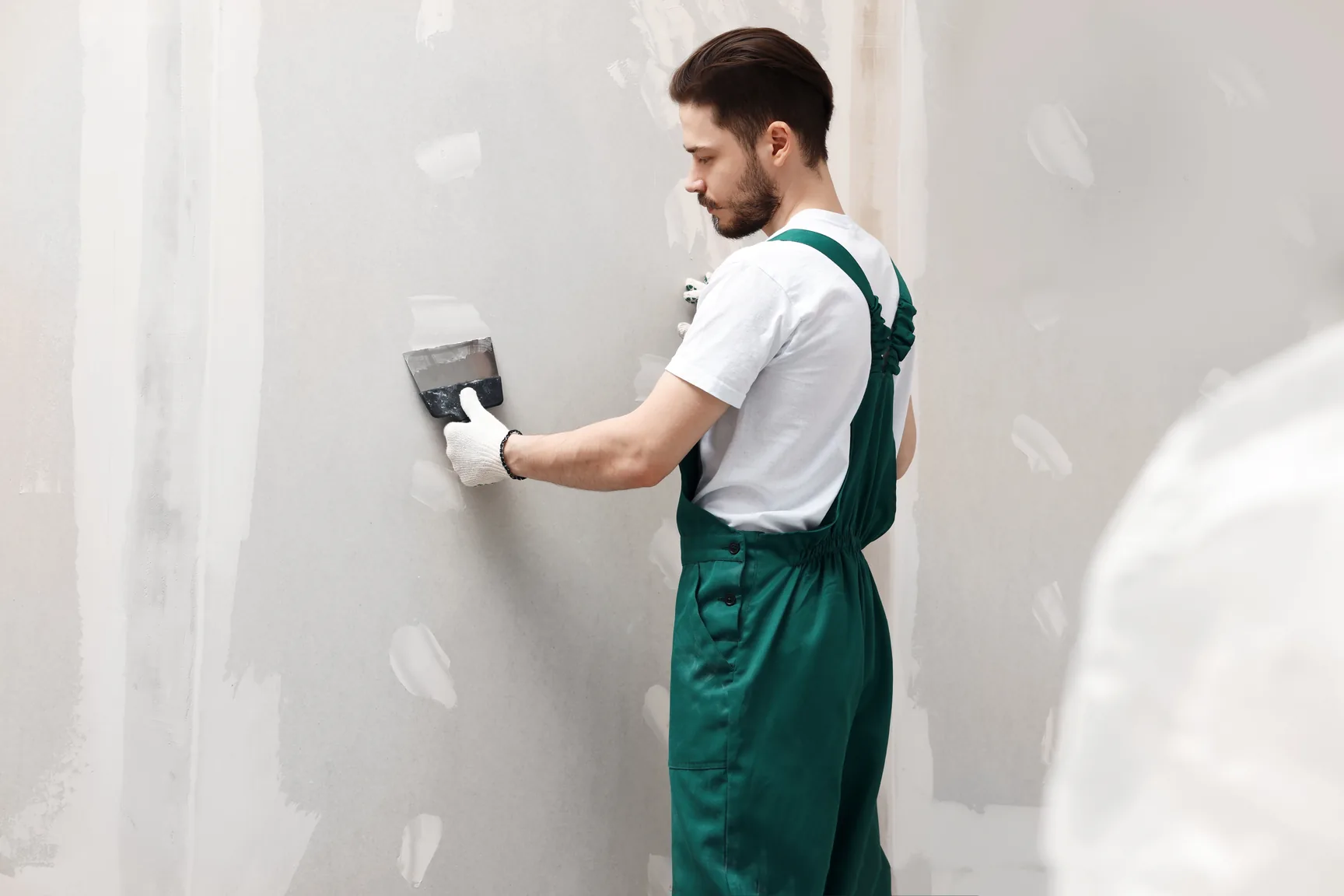
Florida offers drywall contractors a state certification and then, in the same statute, says nobody has to hold it. The Construction Industry Licensing Board runs a certified drywall specialty category, and the contracting law makes that category voluntary. The license a drywall business must actually check is the county’s or the city’s where the job sits. Beyond licensing, lead-safe renovation certification comes from EPA, the state’s asbestos licensing law reaches the removal of asbestos-containing material during renovation and demolition, and workers’ compensation is compulsory for construction employers at a lower threshold than for other private employers, bought from private insurers because there is no state fund.
The panel further down this page gives each finding a single line, and its licensing line says the state offers a voluntary certification and the local license governs. That is the whole of it: a state license reaches drywall work, holding it is a choice, and the county or city license is what a crew must hold. The sections below give the sources’ own words and what an owner can do before the crew is on site.
The policies themselves, and how they fit a drywall business anywhere, are explained on the drywall contractor insurance page. This page stays with Florida. If your crews repair and refinish walls in occupied homes, the residential drywall contractor insurance page is the closer fit; if they hang and tape board on general contractors’ projects, read the commercial drywall contractor insurance page alongside this one.
A two-column comparison. The first column holds the choice: the state’s certified drywall specialty license, which the contracting law makes a voluntary statewide category that creates no mandatory requirement. The second column holds what can be required. The county or city where the job sits may require its own license, and a county does license drywall locally. Lead-safe certification for paid work that disturbs paint in older housing and child-occupied facilities comes from the federal environmental agency, which runs that program in Florida. The asbestos licensing statute requires an asbestos contractor license to remove asbestos-containing material, with an exemption for an owner working on the home the owner lives in. Workers’ compensation is compulsory for construction employers, bought from authorized private insurers because there is no state fund. No figures are shown.
A drywall certification you may hold, and a county license you may need
Florida’s Construction Industry Licensing Board, part of the Department of Business and Professional Regulation, offers a statewide certified drywall specialty contractor license. The contracting law makes every certified specialty category voluntary: it is a statewide licensing category that does not create a mandatory licensing requirement, and a mandatory statewide requirement can only come from a specific statute.
Authority: Fla. Stat. s. 489.113(6); s. 489.117(4)(a); s. 489.105(3)(q)
Put plainly: the state certification is voluntary. A drywall business can hang and finish board in Florida without it, and the statute says so in its own words.
“However, a certified specialty contractor category established by board rule exists as a voluntary statewide licensing category and does not create a mandatory licensing requirement.”
The next sentence of the same subsection closes the door on reading a requirement into it. Only a specific statutory provision can make a statewide construction license mandatory.
“Any mandatory statewide construction contracting licensure requirement may only be established through specific statutory provision.”
A specialty contractor, in the law’s definition, holds a license limited to a phase of construction that the board’s rule sets. That rule’s drywall scope could not be retrieved for this page, so read it on the board’s site before you apply.
“means a contractor whose scope of work and responsibility is limited to a particular phase of construction established in a category adopted by board rule”
The state drywall certification is an option a firm can hold, not a precondition for hanging and finishing drywall in Florida. The law’s list of job scopes a local government may not license names plastering but not drywall, and counties do license drywall locally: Hillsborough County lists drywall among its local specialty contractor licenses, so the rule for a given job comes from the county or city where the work is done.
The statute’s list of job scopes a local government may not license is where the drywall finding turns. The list names plastering. It does not name drywall.
“For purposes of this section, job scopes for which a local government may not require a license include, but are not limited to, painting; flooring; cabinetry; … plastering; pressure washing; stuccoing; caulking; …”
And a county does license drywall. The Hillsborough County contractor licensing page is the example this page verified: the county’s list of local specialty contractor licenses it accepts applications for includes drywall, alongside demolition and plaster and stucco.
So the useful question for any job is not whether Florida licenses drywall work, but whether the county or city where the wall goes up does. As advice, a few habits keep that question from becoming a surprise:
- Before the bid goes out, call the licensing office for the county and, inside a city, the city as well. Ask whether drywall needs a local specialty license and what proof of insurance it wants on file.
- Keep a sheet for each county you work in, with the license it issued you and the date it lapses.
- If you hold the voluntary state certification, treat it as an addition to the local license, not a substitute, until the county or city confirms otherwise.
The insurance proof a general contractor asks for before a commercial job is covered on the commercial drywall contractor insurance page.
Who certifies lead-safe work when a crew opens a painted wall
Florida is not an authorized RRP state: EPA administers the lead renovation, repair and painting program there, so the lead-safe certification a drywall firm needs for paid work that disturbs paint in older housing and child-occupied facilities comes from EPA. EPA also runs the lead-based paint abatement, inspection and risk assessment program in Florida.
Authority: 40 CFR Part 745
Cutting out a damaged section, notching a wall for new blocking or sanding a patch until it disappears into the old finish all disturb paint. In an older home or a child-occupied facility, the federal rule is written for exactly that paid work.
“In general, anyone paid to perform work that disturbs paint in housing and child-occupied facilities built before 1978 must be certified in lead-safe work practices.”
Some states run that program themselves; Florida is not among them. The same holds for the separate program that licenses lead inspection, risk assessment and abatement, which EPA names Florida among the states where it runs directly:
“EPA administers the Lead-Based Paint Activities Program in Alaska, Arizona, Florida, Idaho, Montana, Nevada, New Mexico, New York, South Carolina, South Dakota and Wyoming”
Florida does have a lead program of its own, run by the Florida Department of Health, but it does different work. The department describes it this way:
“The Florida Department of Health conducts surveillance of blood lead testing and poisonings in the state, promotes blood lead screening for high-risk populations, and provides information to health care providers, individuals, and businesses on lead poisoning prevention.”
The Florida Department of Health’s lead work is a public health program: it tracks blood lead testing, promotes screening and shares prevention information, and its own page sends anyone planning renovation or repair of an older home to EPA’s resources. Cutting, patching or sanding painted walls in older housing brings the federal renovation rule into play.
“If you are considering renovation or repair work on your pre-1978 home, view resources from the U.S. Environmental Protection Agency (EPA)”
For an owner, the result is simple: the lead-safe certification your firm and your renovators carry is federal. Whether a given job falls under the rule turns on facts only that job can answer, so put these questions on the estimate sheet:
- When was the building put up, and who told you?
- Is it a home, or a facility where young children spend time?
- How much painted surface will the crew cut, sand or take out, room by room?
Repair work in occupied homes raises these questions most often, which is why the residential drywall contractor insurance page spends time on them.
Tear-out, sanding and Florida’s asbestos licensing statute
Florida reaches drywall and plaster tear-out through its asbestos categories, not by naming the materials. The Florida Department of Environmental Protection enforces the federal asbestos emission standard for demolition and renovation under state rules, and Florida’s asbestos licensing law, administered by the Department of Business and Professional Regulation, says no person may conduct asbestos abatement work without an asbestos contractor license. The law exempts an owner working on a residential building the owner occupies, and the federal standard leaves out small residential buildings.
Authority: Fla. Stat. s. 469.001; s. 469.002; s. 469.003; Fla. Admin. Code ch. 62-257; 40 CFR Part 61, Subpart M
Two layers of law apply here. The words quoted first below are the statute’s, Florida’s asbestos licensing law; the environmental department’s own rule follows, and its pages come last, as guidance rather than law. The licensing requirement takes a single sentence.
“No person may conduct asbestos abatement work unless licensed by the department under this chapter as an asbestos contractor, except as otherwise provided in this chapter.”
The statute does not name drywall, joint compound or plaster. It reaches them through what a material contains and how it behaves. It defines asbestos-containing material this way:
“means any material which contains more than 1 percent asbestos as determined by polarized light microscopy.”
It defines the condition that matters most to a crew with sanders and pry bars by the test of a hand:
“means the condition of any asbestos-containing materials which, when dry, may be crumbled, pulverized, or reduced to powder by hand pressure.”
And its definition of an asbestos contractor names the very settings a drywall business works in:
“remove, encapsulate, or enclose asbestos-containing materials or dispose of asbestos-containing waste in the course of activities including, but not limited to, construction, renovation, maintenance, or demolition.”
The law’s own words decide the reach, and neither Florida’s asbestos licensing statute, the department’s asbestos rule nor the Department of Environmental Protection’s asbestos pages name joint compound, wallboard, gypsum board, drywall, plaster or surfacing material. The statute reaches them through its definitions: asbestos-containing material, material that crumbles by hand pressure when dry, and an asbestos contractor’s removal of such material during construction, renovation, maintenance or demolition. The department’s guidance adds that sanding, cutting or drilling nonfriable material means treating it as friable; that is guidance, not the rule. The statute exempts an owner-occupant’s own residential building, and the federal standard the department enforces excludes small residential buildings from its definition of a facility.
The exemption the statute carves out is narrow, and its words are worth reading in full:
“Moving, removal, or disposal of asbestos-containing materials on a residential building where the owner occupies the building, the building is not for sale or lease, and the work is performed according to the owner-builder limitations provided in this paragraph.”
That exemption describes an owner doing the work on the owner’s own home. It says nothing about a hired crew, and it is not a finding about what is in any particular ceiling or wall.
The department’s own asbestos program rule, in the Florida Administrative Code, sets the order of work. Before a renovation or demolition at a facility starts, it puts a survey first:
“The owner or operator of a renovation or a demolition at a facility must complete a survey of the affected facility or part of the facility where the demolition or renovation operation will occur for the presence of asbestos before commencing the planned renovation or demolition.”
Like the statute, the rule names no drywall material. Its categories carry the weight, and the nonfriable one reaches finishes that will not crumble in the hand:
“means any material, excluding Category I Nonfriable ACM, containing more than 1 percent asbestos as determined using the methods specified in Appendix A, Subpart E, 40 C.F.R. Part 763, Section 1, Polarized Light Microscopy, that, when dry, cannot be crumbled, pulverized, or reduced to powder by hand pressure.”
The rule’s residential exemption is drawn by the size of the building, not by who owns it:
“means an asbestos removal, renovation, or demolition project exempt from the survey and notification requirements of this chapter. This exemption applies to a residential building having no more than four dwelling units.”
So a small house can fall outside the survey and notice duties while the statute’s licensing requirement still governs who may take out regulated material.
The Florida Department of Environmental Protection asbestos program enforces the federal emission standard for demolition and renovation. Its pages are guidance rather than the statute, and they begin with where that authority came from.
“In 1982, EPA delegated primary authority for the implementation and enforcement of the Asbestos NESHAP to the state of Florida.”
The passage in that guidance that speaks most directly to finishers is about tools:
“if you sand, grind, abrade, drill, cut or chip any non-friable materials, including category I materials, you must treat the material as friable, if more than the jurisdictional amount is involved.”
And the order of work is set out plainly: the inspection comes before the demolition or renovation.
“The NESHAP regulation requires that a thorough inspection for asbestos be conducted before demolition or renovation.”
As advice, a few habits follow from all of this:
- On a commercial or multi-unit renovation, ask the building owner or the general contractor for the asbestos inspection before you price the demolition, and read what it says about the walls and ceilings in your scope.
- Write the method into the proposal: which walls come out and which finishes are sanded.
- If regulated material has to come out and your business does not hold an asbestos contractor license, plan for a licensed contractor to do that part, and schedule your crew after it.
On the insurance side, whether a liability policy answers a claim that involves asbestos, and how finished work is treated once the room is back in use, are both taken up on the general liability page.
Payroll, officers and subcontractors under Florida’s comp law
Workers’ compensation is compulsory in Florida for the employers its law covers, and the construction industry is reached at a lower threshold than other private employment. An employer secures coverage by insuring with a stock or mutual company, association or exchange authorized in the state, or by qualifying with the state to pay compensation directly. There is no state fund.
Authority: Fla. Stat. s. 440.02(20)(b); s. 440.10(1); s. 440.38(1)
Florida writes construction into the definition of covered employment, and it does so at a lower threshold than it sets for other private employers:
“All private employments in which four or more employees are employed by the same employer or, with respect to the construction industry, all private employment in which one or more employees are employed by the same employer.”
The security section then says how an employer meets the duty. The first route is insurance with an authorized private insurer; the second, in the same section, is qualifying with the state to pay compensation directly.
“Every employer shall secure the payment of compensation under this chapter: (a) By insuring and keeping insured the payment of such compensation with any stock company or mutual company or association or exchange, authorized to do business in the state;”
A contractor or subcontractor doing public or private construction in Florida must secure compensation for its employees, and a contractor answers for a subcontractor’s employees when the subcontractor has not. Corporate officers in construction can elect an exemption only within the limits the law sets.
“Any contractor or subcontractor who engages in any public or private construction in the state shall secure and maintain compensation for his or her employees under this chapter as provided in s. 440.38”
The Florida Department of Financial Services, Division of Workers’ Compensation puts the construction requirement in a single line on its coverage requirements page:
“Employers with one or more employees, including the owner of the business who are corporate officers or Limited Liability Company (LLC) members, must have workers' compensation coverage.”
There is no state fund in Florida to buy from. The insurance code does set up a plan, run by insurers, for employers the voluntary market will not cover, and that plan is not a state agency. For most drywall businesses, workers’ compensation is placed the same way as the rest of the program: with an insurer authorized in the state, chosen in the private market.
Hangers paid by the board, finishing crews brought in as separate businesses and the certificates they hand you are set out on the workers’ compensation page. Because a contractor answers for a subcontractor’s employees when the subcontractor has not secured coverage, collect each crew’s certificate before it starts.
Nothing verified on this page crosses a state line. If your crews also work outside Florida, the rules where they work are that state’s.
Matching each question to the Florida office that answers it
The Florida Office of Insurance Regulation regulates insurance in the state. You can look up an insurance agency’s license, ours included, on NIPR.com.
The other bodies this page draws on each hold a separate piece. Each link goes to the agency’s own site, and each role is described as the record verified it:
- Construction Industry Licensing Board: licenses and regulates the construction industry, including the voluntary certified drywall specialty category
- Florida Department of Business and Professional Regulation: state professional and trade licensing, including the construction industry and asbestos licensing
- Florida Department of Business and Professional Regulation: licenses asbestos contractors and asbestos consultants
- Florida Department of Environmental Protection: state environmental agency
- Florida Department of Environmental Protection asbestos program: asbestos emission standard enforcement and renovation and demolition notifications
- Florida Department of Financial Services, Division of Workers’ Compensation: workers’ compensation administration, coverage compliance and officer exemptions
- Florida Department of Health: state lead program: blood lead surveillance, screening and prevention information; RRP itself is EPA-administered
What no statewide list can give you is the office that matters most on a weekday morning: the county or city licensing desk where your next job sits.
Metro areas by size, county by county
The metro areas below are the largest metropolitan areas whose principal cities are in Florida, as the U.S. Census Bureau delineates them. Because the license rule for a given job comes from the county or city where the work is done, a crew moving across one of these metros can meet a different rule in each county it crosses.
Miami-Fort Lauderdale-West Palm Beach, FL
Florida counties in this metro: Broward County, Miami-Dade County and Palm Beach County.
Tampa-St. Petersburg-Clearwater, FL
Florida counties in this metro: Hernando County, Hillsborough County, Pasco County and Pinellas County.
Orlando-Kissimmee-Sanford, FL
Florida counties in this metro: Lake County, Orange County, Osceola County and Seminole County.
Jacksonville, FL
Florida counties in this metro: Baker County, Clay County, Duval County, Nassau County and St. Johns County.
North Port-Bradenton-Sarasota, FL
Florida counties in this metro: Manatee County and Sarasota County.
Cape Coral-Fort Myers, FL
Florida counties in this metro: Lee County.
As advice, plan licensing by county, not by metro. Note on every work order which county and which city the job is in, and check that place’s rule before the crew is scheduled.
The coverage pages that pick up where this page stops
This page tells you where Florida’s rules sit. The insurance that answers for the work is the set of policies a drywall business carries wherever it works, and each has its own page:
- General liability for injury and damage to others, during the job and after the room is back in use.
- Workers’ compensation for the crew, including crews paid by the piece and subcontracted finishers.
- Commercial auto for the vans and trucks that haul board, mud and lifts.
- Inland marine coverage for tools and equipment for the lifts, banjos, boxes and sanders that move from job to job.
- Umbrella liability for limits above the primary liability policies, which a subcontract often asks for.
- Commercial property for the shop and what is stored in it.
Which of these weigh most depends on the work, and the service pages take homes and general contractors’ projects each on its own terms. When you are ready to put the pieces together for Florida work, a quote request is the place to start.
State rules decide who may do the work and how; the policies decide who pays when something goes wrong.
- A license, registration or certification is a requirement of the state, not insurance.
A panel for Florida in rows. Each row sets a requirement of the state beside the exposure that requirement leaves open and the coverage line that answers it. Contractor license: The state offers a voluntary certification, and the local license governs. It leaves open injury and damage to others from the work, during the job and after it, which General Liability answers. Lead-safe renovation: The federal program runs lead-safe renovation here. It leaves open paint dust disturbed when older walls are cut, patched or sanded, which General Liability answers. Asbestos in wall and ceiling material: A state program reaches removal of this material. It leaves open disturbing older joint compound, wallboard or plaster, which General Liability answers. Workers’ compensation: Required for covered employers, bought in the open market. It leaves open a crew member hurt on the job, which Workers’ Compensation answers. Notes: A license, registration or certification is a requirement of the state, not insurance. The conclusion reads: State rules decide who may do the work and how; the policies decide who pays when something goes wrong. No figures are shown.
Florida coverage, services and state offices
What we insure
Coverage lines
Outside authorities
- Florida Office of Insurance Regulation
- Florida Department of Business and Professional Regulation
- Construction Industry Licensing Board
- Florida Department of Environmental Protection
- Florida Department of Environmental Protection asbestos program
- Florida Department of Business and Professional Regulation
- Florida Department of Financial Services, Division of Workers’ Compensation
- Florida Department of Health
Florida drywall contractor insurance questions
The state offers a drywall certification. Do we have to hold it before we take jobs in Florida?
No. The Construction Industry Licensing Board offers a certified drywall specialty contractor license, but the contracting law says a certified specialty category is a voluntary statewide licensing category that does not create a mandatory licensing requirement. What you do have to check is the county or city where the job sits, because a county can license drywall work locally.
Hillsborough County lists drywall as a local specialty license. Should we expect the same in every county we work in?
Do not assume it either way. Hillsborough County is the example this page verified: the county’s list of local specialty contractor licenses it accepts applications for includes drywall, alongside demolition and plaster and stucco. Other counties and cities set their own requirements, so as advice, call the building or licensing office for each new county or city before the bid goes out and keep a note of what it told you.
Does the Florida Department of Health certify our crew for lead-safe work in older homes?
No. Its lead work is a public health program built around blood lead testing, screening and prevention information, and its own page sends anyone planning renovation or repair of an older home to EPA. EPA administers the lead renovation, repair and painting program in Florida, so that is where the firm and renovator certification comes from.
A homeowner wants to pull down an old ceiling herself before we hang new board. Does the asbestos law reach her?
The asbestos statute does not apply to an owner moving or removing asbestos-containing material on a residential building the owner lives in, when the building is not for sale or lease and the work stays within the owner-builder limits. That exemption belongs to the owner. It does not carry over to your crew, so as advice, do not start on that ceiling until you know what it contains and who is allowed to take it down.
We only patch and sand. Can sanding an old wall still count as disturbing asbestos?
It can. The Florida Department of Environmental Protection says in its guidance that sanding, grinding, drilling, cutting or chipping nonfriable material means treating it as friable when more than the regulated amount is involved. That is the department’s guidance rather than the statute, but it is the department that enforces the federal standard in Florida, so ask for the inspection results before you sand.
It is just me and a helper on the payroll. Do we still need workers’ compensation?
Most likely, yes. Florida’s law reaches private employment in the construction industry at a lower threshold than other private employment, and the Florida Department of Financial Services, Division of Workers’ Compensation says on its construction page that corporate officers and LLC members who own the business are counted. Officers can elect an exemption only within the limits the law sets, so check the rule for your own setup before you decide not to carry it.
The general contractor says its workers’ compensation will cover our crew. Is that how it works here?
The law tells every contractor and subcontractor doing construction in Florida to secure compensation for its own employees, and it makes the contractor answer for a subcontractor’s employees when the subcontractor has not. As advice, do not lean on the general contractor’s policy: carry your own, and expect to show a certificate for it before the job starts.
If no insurer will write our workers’ compensation, can we buy it from the state?
There is no state fund. Florida’s insurance code sets up a plan, run by insurers, for employers the voluntary market will not cover, and that plan is not a state agency. The Florida Office of Insurance Regulation regulates insurance in the state, and you can check any agency’s license, ours included, on NIPR.com.
This page describes insurance for drywall contractors operating in this state. It is general information, not legal advice and not a statement of coverage. Licensing, lead-safe and asbestos requirements change; verify current requirements with the agency named before relying on them.
Get a quote for your Florida drywall work
Send us the counties your crews cover, the kinds of walls you tear into and how your hangers and finishers are paid, and we will shape a program around that work.