
Coverage line
General Liability Insurance for Drywall Contractors
The policy that answers to people who do not work for you — while the board goes up, after the paint goes on, and when a crew you brought in is the one whose work went wrong.
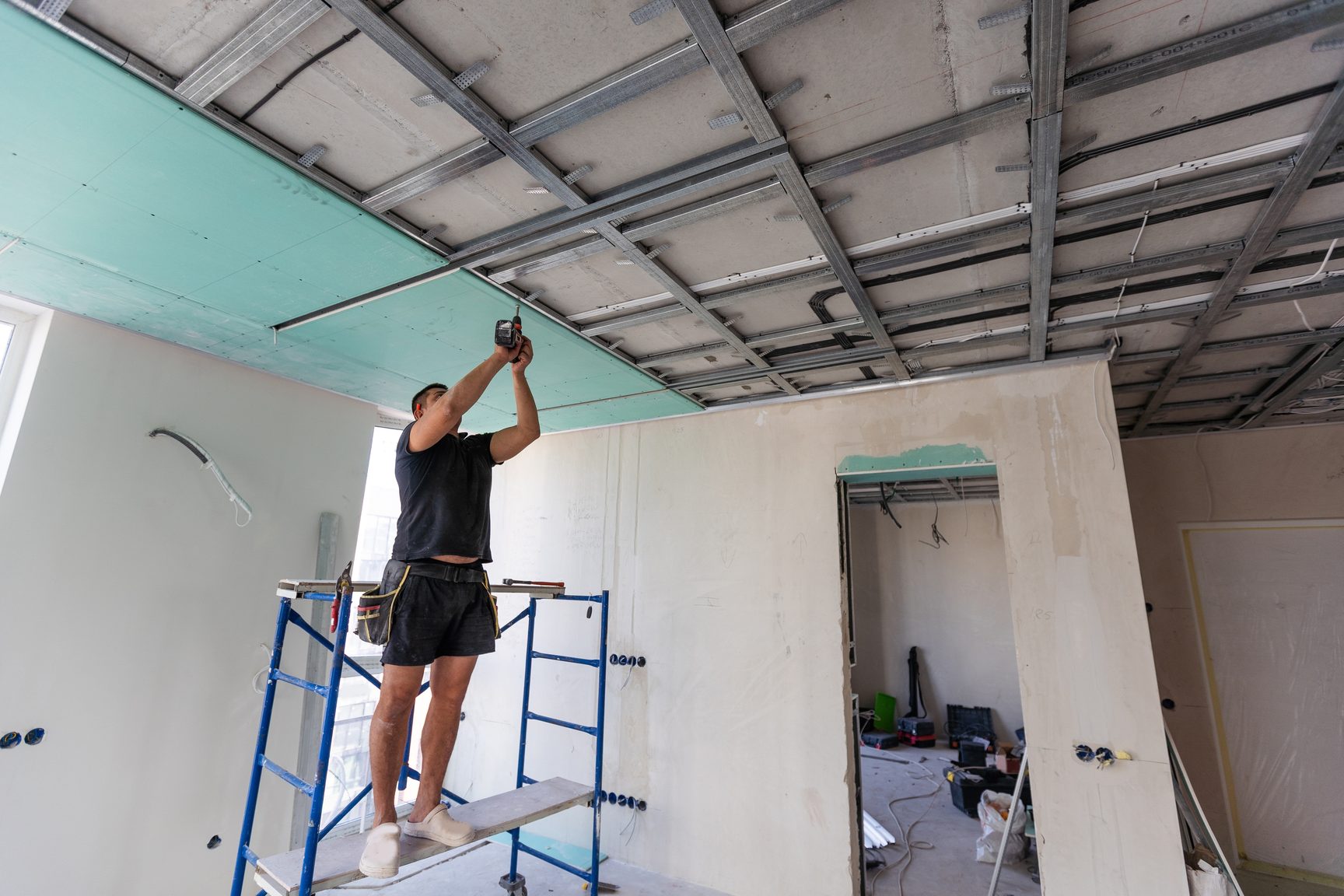
General liability is the policy a drywall business carries for what its work does to other people and their property. A homeowner trips over a stack of board in the hallway, a sanding crew coats a finished hardwood floor in dust, a ceiling you hung last year sags and drops onto a tenant’s desk. It is also the first certificate a general contractor, a property manager or a remodeling client asks to see before your crew starts.
It is not the policy that pays to re-hang or re-finish your own work, replace your lifts and taping tools, or cover a crew member who gets hurt. The edges between those policies are where drywall owners discover what they bought, so this page follows a drywall job the way it actually runs: while the board goes up and gets finished, after the paint is on, when water and mold enter the picture, and when the crew on the wall is not on your payroll.
Where a drywall contractor’s liability starts and stops
Under the standard ISO form as commonly written — the Commercial General Liability Coverage Form, CG 00 01 04 13 — the policy responds to bodily injury and property damage you become legally obligated to pay because of an accident, and it pays to defend the claim. Carriers file their own versions and add endorsements of their own, so the wording on your policy, not this page, decides any real claim.
For a drywall business, that usually puts these on the general liability side:
- a homeowner, tenant, visitor or another trade injured on a job you are running;
- damage to property around the work — finished floors, cabinets, trim, fixtures, furniture and belongings;
- completed work that later causes damage to something else, such as a ceiling that comes down onto contents;
- the cost of defending a claim, including one that turns out to have no merit.
And it usually leaves these to another policy, or with you:
- re-hanging, re-taping or re-finishing your own work that was done wrong;
- your lifts, sanders, taping tools and stock, which belong on an inland marine tools and equipment policy;
- your vans and trucks on the road, which belong on commercial auto;
- an injury to your own employee, which belongs to workers’ compensation.
A two-column comparison. The first column holds the part of the property your crew is working on: the board being hung, taped or finished, and any part that has to be redone because the work was done wrong. Under the standard form, damage to that particular part, and the redo, are generally set aside. The second column holds everything around the work: a finished floor, cabinets and trim, a homeowner’s furniture, the room next door. Damage there is the question general liability is generally about while the job is under way. Your own policy wording decides any real claim. No figures are shown.
While the crew is hanging and taping
While the work is under way, the standard form draws a line around the wall itself. Property damage to that particular part of the building your crew — or anyone working on your behalf — is working on, when your operations cause it, is set aside. So is the cost of redoing a part because your work on it was done wrong. A sheet cracked while it was being hung, or a seam that has to be torn open and re-taped, sits on that side of the line.
Everything else in the room sits on the other side. Joint compound tracked across a finished floor, a corner bead that gouges a door on its way in, a sanding dust cloud that settles on a client’s furniture and works its way into the house’s air returns — that is damage to property you were not hired to work on, and it is the question general liability is about during the job. Remodeling makes it sharper: the rooms are finished, the family may still live there, and the line between the wall you are working on and everything around it is a few feet wide.
Overhead work adds the injury side. Sheets lifted to a ceiling, a drywall lift rolled across an occupied floor, a finisher on stilts or a scaffold over a walkway: when a person who does not work for you is struck or trips, that injury is a general liability question. When the person hurt is your own crew member, it is not — the form excludes it, and it belongs to workers’ compensation.
After the paint goes on: completed work and callbacks
Once a job is finished, a claim moves into the completed-operations part of the policy. Under the standard form, work counts as completed when the contract is done or when that part of the job is put to its intended use by someone other than another contractor on the project — and work that still needs correction or repair, but is otherwise complete, is treated as completed too. That is why a punch-list visit does not hold the job open.
Two kinds of callback look alike and are not. A seam that photographs through the paint, a run of nail or screw pops, a hairline crack along a corner: fixing those is your own work, a workmanship or warranty matter, and the form excludes damage to your own completed work. A ceiling that sags and comes down onto a tenant’s desk, or a failed patch that lets a wall section fall and break what is beneath it, is different. That is damage your work caused to other property, and that is what the completed-operations side of general liability is about.
The form also counts warranties and representations about the fitness or durability of your work as part of your work. A promise in a proposal that a finish will never crack does not make the policy pay to keep it.
Water, moisture and the mold endorsement
A water claim against a drywall contractor starts with a question of whose work let the water in. A roof or window leak, a plumbing failure, framing that was wet when it was closed up, board left standing in water on a slab, or the wrong board hung in a wet area: the answer decides which policy, and whose, the claim belongs to. Your general liability is reading your work, not the plumber’s.
Mold sits one layer further in. The standard general liability form does not carry a mold exclusion of its own. One is added by endorsement — the Fungi Or Bacteria Exclusion, of which CG 21 67 12 04 is one published edition — and that wording excludes injury and damage that would not have happened but for mold or bacteria, and the cost of testing for, removing or responding to it, regardless of what else contributed to it. That reaches mold that grew because somebody else’s water got into a wall you hung. Whether your policy carries an endorsement like that is something to read on your declarations and endorsement schedule, not to assume.
The EPA’s mold pages make moisture control the center of the question, and its guide to mold and moisture in the home is a useful thing to hand a client who asks what to do after a leak. Older housing raises one more check before tear-out or patching: drywall work that disturbs painted surfaces can bring the EPA lead renovation program into the job, and the general liability form’s pollution exclusion is the place that question lands on the insurance side.
Piece-rate and subcontracted crews
Drywall runs on crews that are not always on the payroll: a hanging crew paid by the board, a taper paid by the square foot, a finishing sub brought in for a commercial job that is behind schedule. Whether each of those is really a subcontractor or an employee turns on how the work is controlled, not on what the paperwork says, and the IRS sets out the tests it applies. For general liability, the first question is what happens when that crew’s work goes wrong.
To your client, the crew is you. Under the standard ISO form as commonly written, work performed on your behalf is your work, so a claim that a subcontracted taper ruined a finished floor, or that a sub-hung ceiling came down, is usually made against your business first. The form also carries a subcontractor exception to its exclusion for damage to your own completed work: when the work that was damaged, or the work that caused the damage, was done for you by a subcontractor, that exclusion does not apply. That removes one exclusion; it does not promise the claim is covered, and some policies narrow the exception by endorsement — it is among the first things we read on a drywall submission.
The other half of this seam is a workers’ compensation question: a crew with no insurance of its own can be added to your payroll at the policy audit — the workers’ compensation page takes that side.
A top-to-bottom flow. It begins with a hanging or finishing crew you pay by the piece or as a subcontractor working on your job. Under the standard form, work performed on your behalf counts as your work, so when that work damages property or injures someone, the claim is usually made against your business first. The crew’s own policy, with your business named as an additional insured, is what lets their insurance answer before yours. If the crew carries no insurance of its own, the other half of the question moves to workers’ compensation, where the audit can add what you paid them to your payroll. Your own policy wording decides any real claim. No figures are shown.
Contracts, certificates and additional insureds
General contractors, builders and property managers know where a claim from your work will land, which is why they ask for a certificate of insurance and to be named as an additional insured before you start. Under the standard ISO endorsements, CG 20 10 04 13 adds the scheduled party for claims arising out of your ongoing work, and CG 20 37 04 13 adds them for your completed work. Both say the protection given to the additional insured is no broader than the contract requires, which makes the contract wording the thing to read first.
Ask the same of the crews you bring in: their own general liability, a current certificate, and your business named as an additional insured. When their mistake becomes a claim, their policy is then the first to answer, rather than yours and your loss history.
The contract also sets the limits. A general liability policy carries a limit for each occurrence and aggregate limits for the policy period, with a separate aggregate for completed operations. When a contract asks for more than a primary policy is built to carry, the extra usually comes from an umbrella liability policy above general liability, auto and employer’s liability.
How we place general liability for drywall businesses
We are an independent agency, so no single insurance company owns the answer. We place drywall contractors with markets that want the trade — residential and commercial, new construction and remodeling, board, plaster and acoustical ceilings — and we read the parts of a policy that decide drywall claims before you need them: the subcontractor exception and anything that narrows it, the additional insured endorsements a contract calls for, and whether a fungi or bacteria exclusion is on the policy. Send us a contract and a licensed agent reads it against your coverage before you sign.
Related coverage and services
Coverage and services
- Workers’ Compensation
- Inland Marine — Tools & Equipment
- Umbrella Liability
- Residential Drywall Contractor Insurance
- Commercial Drywall Contractor Insurance
General liability questions drywall contractors ask
Will general liability pay to re-tape a seam or fix nail pops after the job?
Generally not. Fixing your own finish is a workmanship matter, and under the standard ISO form as commonly written damage to your own completed work is excluded. What the policy can answer for is damage the failed work causes to something else, such as paint, trim or a ceiling coming down onto a room’s contents.
Our sanding dust got into a homeowner’s furniture and the house’s air returns. Is that a liability claim?
It can be. Dust that lands on floors, furniture and belongings outside the wall you were working on is damage to property that is not yours, which is the ongoing-operations question general liability is about. How a particular claim is handled turns on the facts and your policy wording.
Is mold covered if a wall we hung later grows it?
Check your policy for a fungi or bacteria exclusion endorsement. The standard general liability form does not carry one, but an endorsement can add it, and that wording reaches mold even when water from somebody else’s work started it. Ask us to read your declarations and endorsements before you need them.
Do the tapers and hangers I pay by the piece need their own insurance?
Expect a general contractor to ask, and your own underwriter will too. A crew with its own general liability, naming your business as an additional insured, lets their policy answer first for their work. Whether they are truly subcontractors or employees is a separate question that also decides your workers’ compensation picture.
What is the difference between the two additional insured endorsements a contract asks for?
One covers the general contractor or owner for claims arising out of your ongoing work; the other reaches completed work. A contract that asks for both is asking for protection that lasts past the day you leave the job. Send us the contract language and we will check it against your policy.
Does general liability cover a member of my crew who falls off stilts?
No. An injury to your own employee belongs to workers’ compensation, and the general liability form excludes it. General liability answers for injury to people who do not work for you, such as a homeowner, a tenant or another trade on the site.
Tell us about your jobs and your crews
A licensed agent reads your current policy against the work you take and the crews you use, and comes back with what the markets will do.