
Coverage line · Inland marine
Tools and Equipment Insurance for Drywall Contractors
Inland marine coverage for the lifts, taping tools, sanders and scaffolds that spend their working life away from your shop — in the van, on the job and staged where the crew left off.
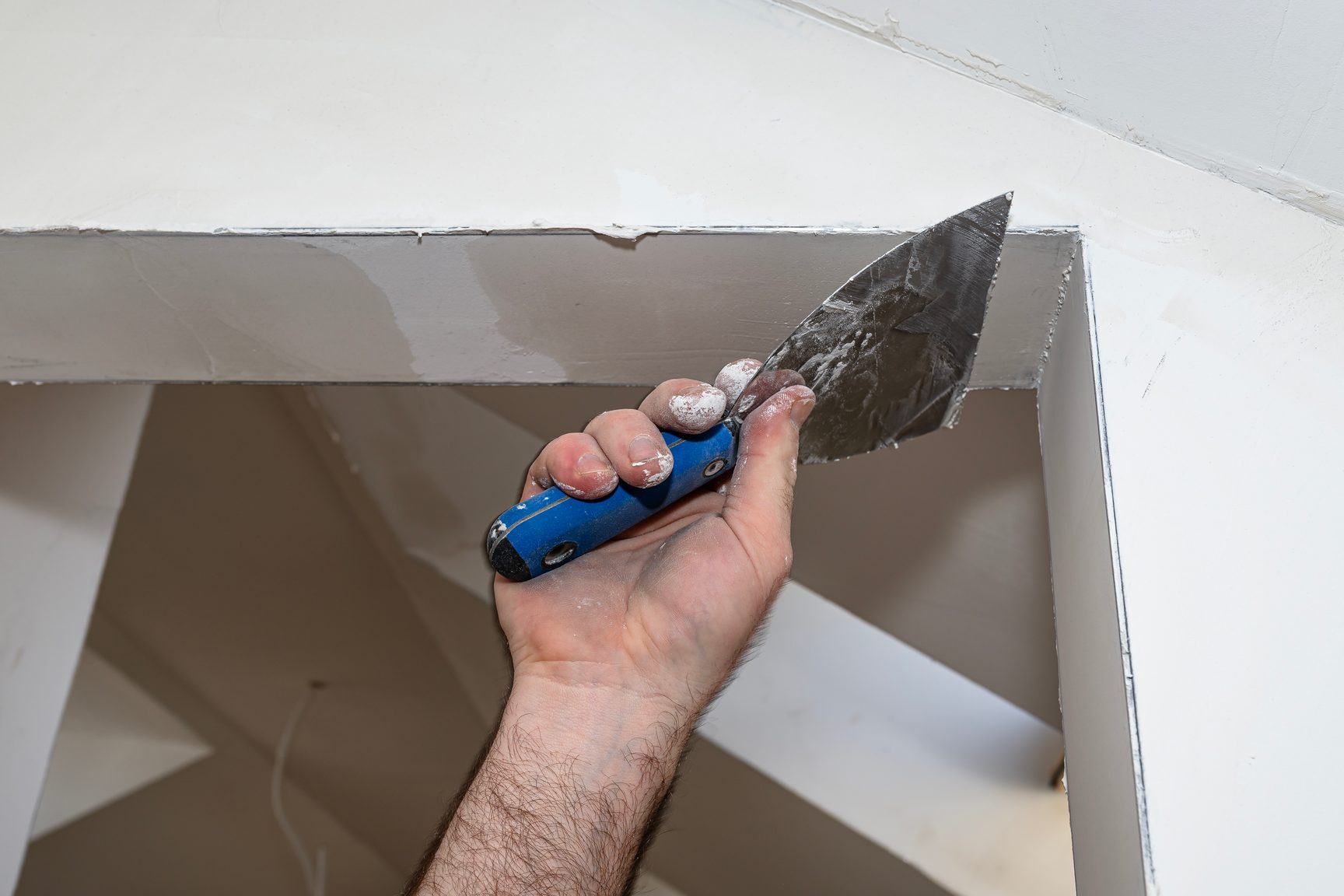
A drywall crew’s working equipment rides in the van: the lift that holds board against a ceiling, the automatic taper and flat boxes, the sanders, screw guns, stilts and rolling scaffold. Insurance for that gear is written as inland marine, most often on a tools and equipment floater — property coverage built to travel with the equipment instead of staying at an address. It pays for the tools themselves when they are stolen or damaged, wherever the work has taken them.
Below, we follow that equipment through a drywall business: why the shop’s property policy loses track of it, how the big pieces and the small tools are usually listed, what to read before a van break-in, which tools you do not own raise questions, where board and compound waiting to be hung belong, and the conditions that shape how a claim is settled. It describes coverage in general terms. Your own policy wording decides any real claim.
Why a shop property policy loses track of your tools
A commercial property policy is written around a place. Under the standard ISO form as commonly written — the Building and Personal Property Coverage Form, CP 00 10 10 12 — your business personal property is covered at or near the premises described in the declarations. The form carries an extension for property temporarily at a location you do not own, lease or operate, but it is a limited extension, and it does not apply to property in or on a vehicle. The same form also steps back from property that another policy describes more specifically.
That form carries no named exclusion for contractors’ tools. The gap is structural: a drywall business’s tools spend their days in a van and on other people’s jobs, which is where an address-based policy reaches least. Some business owners policies may extend to tools that travel to nearby job sites, so read what yours says before assuming either way.
Despite the name, inland marine covers property kept on land. The Texas Department of Insurance lists contractor equipment among the things it is written for, the California Department of Insurance names equipment floaters for contractors’ equipment, and the NAIC’s nationwide inland marine definition includes floaters for mobile machinery and equipment. What it does not offer is a standard form number to point to. Contractors’ equipment coverage is a nonfiled line, so each insurer writes its own form and the terms differ from market to market.
A two-column comparison. On the property side is the shop’s commercial property policy under the standard form as commonly written: business property at or near the premises named in the declarations, and a limited extension for property temporarily somewhere you do not own, lease or operate, which does not reach property in or on a vehicle. On the floater side is a tools and equipment floater, written on inland marine terms: the taping set and screw guns in the van, the lifts, stilts and rolling scaffolds staged at the job, and the equipment moving between jobs. Your own policy wording decides any real claim. No figures are shown.
The lifts, taping sets and sanders that travel with you
Drywall gear is bulky where it is big and costly where it is small. Drywall lifts and panel hoists ride on a trailer or in the van and are often left on site between workdays. Automatic taping and finishing tools — the taper, flat boxes, corner rollers and finishers, compound pumps and handles — travel together, pack into a small space and carry a lot of value for their size, which makes them an easy target. Pole and long-reach sanders and the dust extractors that go with them move between the van and the job every day.
Around them sits the small-tool pile: screw guns and autofeed attachments, cordless kits with their batteries and chargers, cut-out and rotary tools, mud mixers and paddle drills, laser levels. Then the access equipment: stilts, rolling scaffolds, baker scaffolds, planks and benches, often staged at the job overnight so the crew can pick up where it stopped. Each of these leaves your premises as a matter of routine, and that routine is the reason a floater exists.
A floater answers for the tools themselves. When a lift rolls into a client’s cabinets or a falling flat box injures someone, that is a different question: what your work does to other people’s property or bodies belongs to general liability.
Naming the costly pieces and pooling the rest
Floaters usually let you choose between listing equipment and covering it as a group. Scheduled items are listed piece by piece, each with its own description and amount: the lift, a panel hoist, a complete automatic taping set. A blanket amount covers a category of property — the hand tools, cordless kits and small power tools — under a pooled limit, without naming each piece.
The trade is detail against convenience. A schedule makes it plain what is covered and for how much, but it has to be kept current: a lift bought partway through the policy term and never added may not be on it. A blanket amount follows the tool pile as it changes, but ask how it treats any individual tool, and whether the form limits what it pays for an item inside the blanket. That answer sits in the form, not in the headline amount on the declarations.
For a taping set, ask whether the floater lists the set as a whole or its parts separately. The choice can matter when part of a set goes missing and the rest is left behind.
When tools go missing from a van or a jobsite
A van broken into overnight, a taping set gone from a house under construction, a lift missing from a commercial job when the crew comes back: these are the losses a drywall owner has in mind when buying a floater. They are also where policy conditions do the most work.
Read the theft conditions before you need them. Many tools and equipment forms attach conditions to theft from a vehicle — how the vehicle or a compartment must be locked or secured, and what evidence of entry is required — and the wording varies from insurer to insurer. Theft from an open or unsecured site can be treated differently from theft out of a locked vehicle, so ask how your form reads equipment left staged at the job. We quote no wording here, because no standard version exists to quote.
After a theft, the standard inland marine conditions ask you to notify the police if a law may have been broken, give the insurer prompt notice, and describe the property and how, when and where the loss happened. That is easier with a tool list kept before anything goes missing: make, model and serial number for the larger pieces, photos of the van’s load, and receipts where you have them. The list is our advice rather than form text, but it is what turns a memory into a description an adjuster can work with.
The van itself sits on a separate policy: the vehicle is written on commercial auto, and the tools inside it are the floater’s question.
A top-to-bottom flow. It begins with tools taken from a van or a job. The next step is to notify the police when a law may have been broken. Then the insurer is given prompt notice, with a description of the property and of how, when and where the loss happened. A tool list with serial numbers, photos and receipts, kept before the loss, is practical advice that makes that description easier; it is not form text. The claim then turns on the policy’s own theft conditions and on how it values the tools. Your own policy wording decides any real claim. No figures are shown.
Tools your business does not own
Plenty of the equipment on a drywall job is not the company’s. Finishers and tapers often own their boxes, knives and handles. A lift may be rented for a ceiling job, a scaffold rented for a stairwell, a taping set borrowed from another contractor to finish on schedule. No standard answer covers these, so put the questions to your agent before a loss:
- Can the floater include tools your employees own, and on what terms?
- Does it reach equipment you rent or borrow, or does that need to be added?
- What does the rental contract make you responsible for if a rented lift is stolen or damaged in your care?
Forms differ on all of this: some include rented equipment and others need it added by endorsement. A crew you pay by the piece is a separate case — their own tools are their own insurance question, apart from how that crew is treated on your liability and workers’ compensation policies.
Board, tape and compound before they are hung
Tools are not the only property moving between your shop and the job. Board, compound, tape, corner bead and fasteners ride in the truck and sit stacked at the job before they go up, and a delivered stack can be stolen or rained on before a crew touches it. That material is usually insured another way: on an installation floater, which is inland marine coverage on property a contractor is installing, or within a builders risk policy on the project. The NAIC definition reaches building materials and supplies in transit, in temporary storage and where the work is being performed.
Ask who carries that risk on each job — you, the general contractor or the owner — because contracts place it differently. After the board is hung it becomes part of the building, and later damage to it is generally a property, builders risk or liability question rather than a floater question.
The conditions that shape a tools claim
Insurers write their own tools forms, but the standard ISO inland marine program carries a common set of loss and general conditions, and an older edition, Commercial Inland Marine Conditions CM 00 01 09 04, shows their shape. That form grants no coverage on its own; it sets the rules a claim runs under, and an insurer’s own form can change them. Under the standard form as commonly written:
- Duties after a loss. Notify the police when a law may have been broken, give prompt notice, and describe what was lost and how, when and where it happened.
- Pairs and sets. When part of a pair or set is lost or damaged, the insurer may repair or replace that part to restore the set’s value before the loss. That may bear on a taping set missing a box, though how a given form applies it is a question for your policy.
- Valuation. Property is valued at the least of its actual cash value, the cost of reasonably restoring it, or the cost of replacing it with substantially identical property. For a worn sander or a well-used taping set, actual cash value and replacement can sit far apart, and many tools forms set their own valuation terms. Ask which basis yours uses.
We are an independent agency and place drywall contractors’ tools and equipment with markets that write the trade. We read the schedule against your tool list, check the theft conditions and the valuation basis, and ask how employees’ tools and rented equipment are treated. The Texas Department of Insurance puts the advice plainly: if your business uses property your commercial property policy does not cover, ask your agent about inland marine.
Where the rest of the program picks up
Coverage and services
- General Liability
- Commercial Auto
- Workers’ Compensation
- Residential Drywall Contractor Insurance
- Commercial Drywall Contractor Insurance
Questions about insuring drywall tools
We already insure the shop. What does that policy do for tools sitting on a job across town?
Often less than owners expect. A commercial property policy is written around the premises on its declarations. Under the standard ISO form as commonly written, the extension for property temporarily somewhere else is limited and does not reach property in or on a vehicle. Tools that live in the van and move between jobs are what an inland marine floater is written for.
A finisher on my crew keeps his own flat boxes in my van. If they are stolen, whose policy answers?
That is a question to put to your agent before it happens. Some floaters can include tools your employees own, on terms the form sets, and some cannot. Ask us to check whether yours does and what it asks of you. A crew you pay by the piece is a different case: their tools are their own insurance question.
Does a drywall lift I rent for a ceiling job belong on my floater?
Start with the rental contract, because it often makes the renter responsible for loss or damage while the lift is in your care. Whether your floater reaches rented or borrowed equipment depends on the form: some include it and others need it added. Send us the contract and we will read it against your policy.
What should I keep on file so a stolen taping set can be claimed?
A tool list made before anything goes missing: make, model and serial number for the larger pieces, photos of the van’s load and receipts where you have them. After a theft, notify the police and give the insurer prompt notice with a description of what was taken and how, when and where. The list is practical advice, not form text.
Will the floater pay what a new sander costs, or what my worn sander was worth?
It depends on the valuation terms in your form. The standard inland marine conditions value property at the least of actual cash value, the cost of restoring it, or the cost of replacing it with substantially identical property, and many tools forms set their own terms. Ask which basis your policy uses before a loss.
Who insures the board and compound between delivery and hanging?
Usually not your tools floater. Material in transit or stacked at a job before installation is commonly written on an installation floater or within a builders risk policy on the project, and the contract decides whether you, the general contractor or the owner carries it. After the board is hung it becomes part of the building.
List the tools and lifts you rely on
Send us your tool list, or just the big pieces, and a licensed agent will come back with how the markets would schedule, blanket and value them.