
Drywall Contractor Insurance by State
Massachusetts Drywall Contractor Insurance
Massachusetts registers home improvement contractors, licenses whoever supervises permitted work, issues its own lead-safe renovation license, names gypsum wallboard in its asbestos rule and requires workers’ compensation of every employer.
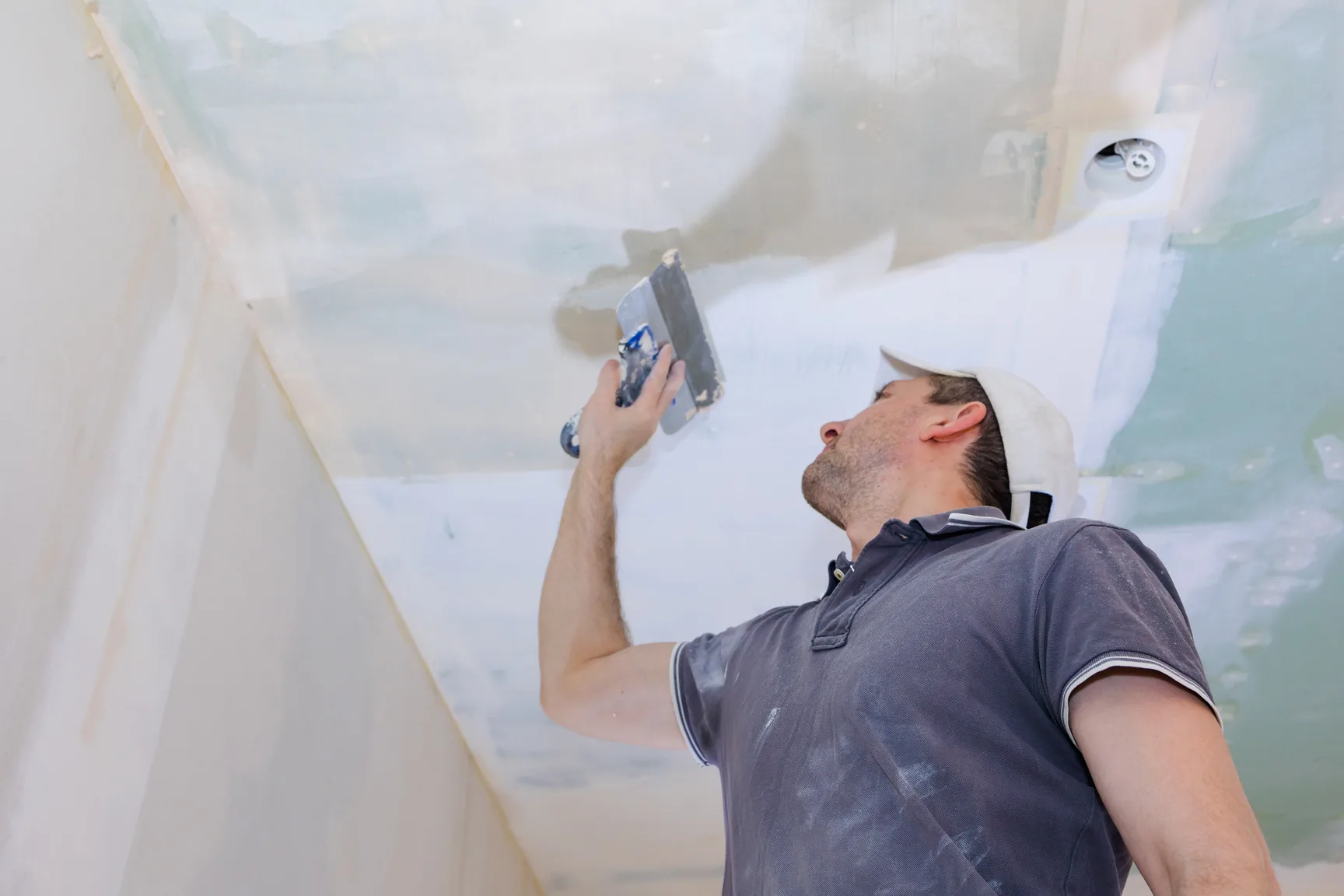
Massachusetts puts its own hand on drywall work at nearly every step. Work on an existing home the owner lives in calls for a Home Improvement Contractor registration with the Office of Consumer Affairs and Business Regulation. A job that needs a building permit calls for a supervisor who holds a Construction Supervisor License under the Board of Building Regulations and Standards. Cutting into painted walls in older housing calls for the state’s own lead-safe renovation license from the Department of Labor Standards. The asbestos rule of the Massachusetts Department of Environmental Protection names gypsum wallboard and joint compound in its text, and workers’ compensation is required of every employer, met in the private market because there is no state fund.
How the policies behave for a drywall business anywhere is explained on the drywall contractor insurance page. Repair work in occupied homes has its own residential drywall contractor insurance page, and board hung for general contractors is covered on the commercial drywall contractor insurance page. What follows stays with Massachusetts.
A comparison in columns. The first column is the Home Improvement Contractor registration, issued with the approval of the state consumer affairs office. It reaches renovation, repair and improvement of an existing home the owner lives in, where the building holds only a small number of dwelling units, and it leaves out new construction, rental property and commercial buildings. The law never names drywall; it reaches the work through its general words. The second column is the Construction Supervisor License under the state building code. It reaches the person who supervises work the code regulates, so it follows the building permit, and the code inspects gypsum board before the joints are taped. No specialty license names drywall, so the work sits under the general licenses. The consumer office’s chart marks wallboard work as needing both credentials and a permit, and calls itself general guidance. No figures are shown.
Owner-occupied homes need the registration; permitted jobs need a licensed supervisor
Massachusetts reaches drywall work through two state credentials. A contractor or subcontractor doing residential contracting on an existing owner-occupied home with a small number of dwelling units must hold a Home Improvement Contractor registration from the Office of Consumer Affairs and Business Regulation. Separately, the state building code requires a Construction Supervisor License, issued under the Board of Building Regulations and Standards, for anyone supervising construction, alteration or repair that the code regulates, and the code’s own inspection schedule covers lath and gypsum board. The board’s list of supervisor license types offers no specialty license for drywall: the work sits under the unrestricted and the one-and-two-family licenses, whose scope is construction, alteration, repair, removal or demolition.
The registration law reaches renovation, repair and improvement of existing owner-occupied homes only, so new construction, rental and commercial work fall outside it; the building code license follows the permit, and the consumer agency’s own chart marks sheetrock and wallboard work as needing a supervisor license, a registration and a building permit, while warning that the chart is general guidance and that the local building official decides.
Authority: M.G.L. c. 142A, §§ 1, 9; 780 CMR 110.R5.1.3; 780 CMR 110.3.5
The registration comes first in most residential work, and the statute states the duty plainly. It applies to subcontractors as well as to the business that signs with the homeowner.
“No contractor or subcontractor shall undertake, offer to undertake, or agree to perform residential contracting services unless registered therefor with the approval of the office of consumer affairs and business regulation.”
What counts as residential contracting is where the law draws its line. The definition never mentions drywall, wallboard or plaster; it reaches hanging, taping and finishing through its general words, and it limits that reach by the kind of building:
“the reconstruction, alteration, renovation, repair, modernization, conversion, improvement, removal, or demolition, or the construction of an addition to any pre-existing owner occupied building containing at least one but not more than four dwelling units”
The building has to exist already, the owner has to live in it, and it can hold only a small number of dwelling units. New construction, rental property and commercial buildings fall outside it.
The supervisor license asks a different question: not whose house it is, but who is supervising work the state building code regulates.
“Individuals supervising persons engaged in construction, reconstruction, alteration, repair, removal or demolition involving any activity regulated by any provision of 780 CMR, shall be licensed in accordance with 780 CMR 110.R5.”
None of the board’s specialty licenses names drywall, so the work sits under the general licenses, whose scope the board prints this way:
“Construction, reconstruction, alteration, repair, removal, or demolition”
The code also stops the drywall sequence between hanging and finishing:
“Lath and gypsum board inspections shall be made after lathing and gypsum board, interior and exterior, is in place, but before any plastering is applied or gypsum board joints and fasteners are taped and finished.”
As advice, ask on every permitted job whether that inspection applies, and build the wait into the schedule before the taper arrives.
The consumer office also publishes a chart of common jobs, and its wallboard row marks the supervisor license, the registration and a building permit all as required. The office calls that chart guidance, not a ruling:
“The chart below is for general guidance only, whether a CSL or building permit is required depends on project specifics.”
Put together, the practical reading for an owner runs like this:
- Hold the registration before you bid repair work in a home the owner lives in, and confirm the building fits the definition rather than assuming it does.
- Know who on your payroll holds a supervisor license, and put that person in charge of any job with a permit.
- On new houses and commercial buildings the registration drops out, but the permit and the supervisor license may not. The local building official decides.
The proof of insurance a homeowner or a general contractor may ask for is taken up on the residential drywall contractor insurance and commercial drywall contractor insurance pages.
Tearing out walls and ceilings under the state’s own lead rule
Massachusetts runs its own lead-safe renovation program in place of EPA’s. EPA lists Massachusetts among the states it has authorized to operate their own renovation, repair and painting programs, and the state Department of Labor Standards licenses lead-safe renovation contractors under 454 CMR 22.00, which applies to all renovation done for pay in target housing and child-occupied facilities.
Authority: 454 CMR 22.01(2)(b); 454 CMR 22.02; 454 CMR 22.03(3); 40 CFR Part 745
In most of the country the federal environmental agency certifies the firms that disturb paint in older housing. Massachusetts is on the agency’s list of places that run the program themselves:
“EPA administers the RRP Program in most Tribes, states and territories, but has authorized the following to operate their own programs: Alabama, Delaware, Georgia, Iowa, Kansas, Massachusetts …”
The state rule then sets out what it covers. Its reach is renovation done for pay in older housing and in the places where young children spend their days:
“The provisions of 454 CMR 22.00, as indicated, also apply to all renovation work activities conducted for compensation in Target Housing and Child-occupied Facilities.”
Under the state rule, no firm may perform or offer renovation work in that housing or those facilities without a Lead-safe Renovation Contractor license, and the rule’s definition of renovation names the removal of walls and ceilings and large surface replastering, which is drywall and plaster tear-out.
“No person, firm, corporation or other entity shall perform, offer, or claim to perform Renovation Work in Target Housing or Child-occupied Facilities unless … licensed as a Lead-safe Renovation Contractor”
The definition of renovation is what makes this a drywall rule and not only a painting rule. Among its examples is the work a drywall crew is hired to do when it opens up an older room:
“the removal of portions of structures (e.g., walls, ceiling, large surface replastering, major re-plumbing); and window replacement.”
The Department of Labor Standards, which runs the program, puts it more simply in its guidance to contractors:
“If a home was built before 1978, it may contain dangerous lead paint. When renovating, repairing, or painting, a licensed lead-safe renovation contractor must be used.”
As advice, treat the state rule as the one that governs here, not the federal paperwork you may already hold. Before the estimate is final on an older home or child-occupied building, note when it was built, whether walls or ceilings come out, and whose Lead-safe Renovation Contractor license covers your crew’s part of the job.
How a liability policy treats a claim that involves lead dust is a separate question, worked through on the general liability page.
Survey, notice and wet methods before a wall comes down
Massachusetts’s asbestos rule, 310 CMR 7.15, run by the Massachusetts Department of Environmental Protection, names gypsum wallboard and joint compound outright. It requires a survey by an asbestos inspector before renovation or demolition of anything containing suspect material, lists plaster as suspect material, sets prior notice to the department before abatement, and gives wallboard and joint compound their own work practices: presume asbestos unless testing or the manufacturer’s specifications say otherwise, cut as little as possible and never sand dry. The Department of Labor Standards separately licenses the people and firms that do asbestos work.
Authority: 310 CMR 7.15(1), (4), (6), (13)(c); M.G.L. c. 149, § 6A; 454 CMR 28.00; 40 CFR 61, Subpart M
This rule names the materials a finisher handles every day. Start with its text. Before renovation or demolition, the owner or operator of a building with suspect material brings in an inspector:
“the owner/operator of a facility or facility component that contains suspect ACM shall, prior to conducting any demolition or renovation, employ or engage an asbestos inspector to thoroughly inspect the facility or facility component”
Plaster is on the rule’s list of suspect material, so an older plastered room raises the survey question before anyone touches it:
“SUSPECT ASBESTOS-CONTAINING MATERIAL includes, but is not limited to, non-fiberglass insulation (e.g. pipe, boiler, duct work, etc.), cement/transite shingles, vinyl floor and wall tiles, vinyl sheet flooring, plaster, …”
The survey duty carries an exception, and the rule words it narrowly:
“With the exception of the owner of an Owner-Occupied, Single-Family Residence who performs asbestos abatement activities at the owner’s residence involving solely non-friable ACM”
The definition behind that exception narrows it further:
“OWNER-OCCUPIED, SINGLE-FAMILY RESIDENCE does not include rental property, multiple-family buildings, mixed use commercial/residential buildings or structures used for fire training exercises.”
A hired drywall contractor is not that owner. As advice, do not let a homeowner’s reading of the exception stand in for the survey on a job your crew performs.
Abatement also needs notice to the department in advance:
“the owner/operator of a facility or facility component shall notify the Department and obtain Department authorization prior to conducting any asbestos abatement activity”
Small wallboard jobs get their own category, with work practices of their own:
“INCIDENTAL MAINTENANCE PROJECT OR WORK means any asbestos abatement activity … which involves the removal or disturbance of: … 32 square feet or less of asbestos-containing gypsum wallboard and/or joint compound.”
Those practices start from a presumption that matters to every finisher:
“Any person conducting an incidental maintenance project or work involving the removal of gypsum wallboard and/or joint compound shall presume that said materials contain asbestos unless the results from an asbestos bulk analysis or manufacturer’s specifications indicate otherwise.”
And they rule out the way a finishing crew usually smooths a patch:
“Dry sanding of asbestos-containing gypsum wallboard and/or joint compound during refinishing operations is prohibited; only wet sanding is permitted.”
The environmental department’s resource guide adds guidance on top of the rule: it lists wallboard and joint compound among common asbestos materials and says the people hired for the work answer to the Department of Labor Standards. Both are guidance, not the rule:
“Examples of commonly found asbestos containing materials include, but are not limited to, heating system insulation, floor tiles and vinyl sheet flooring, mastics, wallboard, joint compound, decorative plasters, …”
“Only DLS licensed and DLS certified asbestos abatement contractors and consultants may be hired to perform asbestos-related work in Massachusetts.”
Some habits follow from reading the rule this way:
- Before you price a tear-out in an older building, ask the owner for the asbestos survey and read what it found on the walls and ceilings in your scope.
- On small wallboard and joint compound repairs, work to the rule’s practices from the start: presume asbestos unless testing says otherwise, keep cutting to a minimum and sand wet.
- If regulated material has to come out beyond that, schedule a licensed asbestos contractor for that part and bring your crew in after it.
Whether a liability policy responds to an asbestos claim, and how finished work is treated once the room is back in use, are taken up on the general liability page.
Every employer insures, and the commissioner steps in when no insurer will
Workers’ compensation is compulsory in Massachusetts: the law tells every employer to provide for paying its employees’ compensation, by insurance with an insurer, membership in a self-insurance group, or a self-insurer license from the Department of Industrial Accidents. Coverage comes from the private market; there is no state fund, and an employer turned down by two insurers can appeal to the commissioner of insurance, who designates an insurer to issue the policy.
Authority: M.G.L. c. 152, § 25A; M.G.L. c. 152, § 1; M.G.L. c. 152, § 65A; M.G.L. c. 152, § 65
The statute states the duty for every employer, and the first route it lists is insurance:
“In order to promote the health, safety and welfare of employees, every employer shall provide for the payment to his employees of the compensation provided for by this chapter in the following manner:”
“By insurance with an insurer or by membership in a workers' compensation self-insurance group”
The law describes the insurer by function, not by name:
“any insurance company, reciprocal, or interinsurance exchange, authorized so to do, which has contracted with an employer to pay the compensation provided for by this chapter.”
The Department of Industrial Accidents puts the requirement in everyday terms, and says what it does not do:
“All employers operating in Massachusetts are required to carry workers’ compensation insurance for their employees and themselves if they are an employee of their company.”
“The Department of Industrial Accident DOES NOT set insurance rates or issue workers’ compensation policies.”
For an employer the market turns away, the statute supplies a route that still runs through private insurers. The commissioner of insurance designates one:
“the commissioner shall designate an insurer who shall forthwith, upon the receipt of the payment for the premium therefore, issue to such employer a policy of insurance”
So the coverage is placed in the private market, through a self-insurance group or under a self-insurer license, and a declined application leads to the commissioner, not to a government fund.
Hangers and tapers paid by the board, finishing crews working under a separate business and owners who draw a wage raise policy questions the workers’ compensation page sets out. As advice, settle how each person on a job is paid and documented before the audit asks.
The consumer office, the code board and the rest of the roster
The Division of Insurance regulates insurance in the state. You can look up an insurance agency’s license, ours included, on NIPR.com.
The other offices on this page each hold one part of the picture. Each link goes to the agency’s own site, and each role is described as the record verified it:
- Office of Consumer Affairs and Business Regulation: Home Improvement Contractor registration (M.G.L. c. 142A)
- Board of Building Regulations and Standards: state building code (780 CMR) and Construction Supervisor License; part of the Office of Public Safety and Inspections
- Office of Public Safety and Inspections: building construction and design safety; houses the building code board
- Department of Labor Standards: state-run lead-safe renovation program (EPA-authorized): Lead-safe Renovation Contractor licensing under 454 CMR 22.00
- Massachusetts Department of Environmental Protection: state environmental agency; asbestos rule 310 CMR 7.15, surveys and notifications
- Department of Labor Standards: occupational asbestos regulation and licensing of asbestos contractors, workers and consultants (454 CMR 28.00)
- Department of Industrial Accidents: workers’ compensation administration, self-insurer licensing and coverage enforcement
The labor department appears twice because it runs both the lead-safe renovation license and asbestos licensing. The office you will deal with most in an ordinary week is still local: the building department that issues the permit and decides what each job needs.
Census metros with a principal city in the Commonwealth
The metro areas below are the largest metropolitan areas whose principal cities are in Massachusetts, as the U.S. Census Bureau delineates them. The registration and the supervisor license are statewide, so they travel with a crew from one of these counties to the next, while permits and inspections stay with each city and town.
Boston-Cambridge-Newton, MA-NH
This metro crosses the state line, and this card names only its Massachusetts counties: Essex County, Middlesex County, Norfolk County, Plymouth County and Suffolk County.
Worcester, MA
Massachusetts counties in this metro: Worcester County.
Springfield, MA
Massachusetts counties in this metro: Hampden County.
Barnstable Town, MA
Massachusetts counties in this metro: Barnstable County.
Amherst Town-Northampton, MA
Massachusetts counties in this metro: Hampshire County.
Pittsfield, MA
Massachusetts counties in this metro: Berkshire County.
As advice, where a metro crosses a state line, the credentials on this page stop at it; check the other state’s rules before you send a crew.
What each policy answers for once the paperwork is in order
The registration, the supervisor license, the lead license and the asbestos rule govern how the work is done. The policies answer for what happens when something goes wrong anyway, and each has its own page:
- General liability for injury and damage to others, including tear-out and work the owner is already using again.
- Workers’ compensation for the crew, including crews paid by the piece.
- Commercial auto for the vans and trucks that carry board, compound and lifts to each job.
- Inland marine coverage for tools and equipment for the lifts, banjos and sanders that move from site to site.
- Umbrella liability for limits above the primary liability policies, often written into a general contractor’s subcontract.
- Commercial property for the shop and what is stored there.
A crew patching walls in owner-occupied homes meets the registration and older finishes far more often than a crew hanging board on a builder’s project, so the mix of work decides which of those matter most. When you are ready to price the whole program for Massachusetts work, a quote request is the place to start.
State rules decide who may do the work and how; the policies decide who pays when something goes wrong.
- A license, registration or certification is a requirement of the state, not insurance.
A panel for Massachusetts in rows. Each row sets a requirement of the state beside the exposure that requirement leaves open and the coverage line that answers it. Contractor license: A state license or registration reaches drywall work. It leaves open injury and damage to others from the work, during the job and after it, which General Liability answers. Lead-safe renovation: The state runs its own lead-safe renovation program. It leaves open paint dust disturbed when older walls are cut, patched or sanded, which General Liability answers. Asbestos in wall and ceiling material: A state program reaches removal of this material. It leaves open disturbing older joint compound, wallboard or plaster, which General Liability answers. Workers’ compensation: Required for covered employers, bought in the open market. It leaves open a crew member hurt on the job, which Workers’ Compensation answers. Notes: A license, registration or certification is a requirement of the state, not insurance. The conclusion reads: State rules decide who may do the work and how; the policies decide who pays when something goes wrong. No figures are shown.
Nearby states we also write
Massachusetts coverage, services and state offices
What we insure
Coverage lines
Outside authorities
Massachusetts drywall contractor insurance questions
Most of our jobs are patching and refinishing walls for homeowners who live in the house. Which state credential comes first?
The Home Improvement Contractor registration. The registration law bars a contractor or subcontractor from offering or performing residential contracting without registering with the approval of the Office of Consumer Affairs and Business Regulation, and it defines that work as renovation, repair and improvement of an existing owner-occupied building with a small number of dwelling units. If the job also needs a building permit, the person supervising it may need a Construction Supervisor License as well.
The town building official says our ceiling job needs a permit. Who on the crew has to be licensed?
The person supervising the work. The state building code requires anyone supervising construction, alteration or repair that the code regulates to hold a Construction Supervisor License, which is issued under the Board of Building Regulations and Standards. No specialty license names drywall, so the license in question is one of the general ones. The building official decides what the job needs, and the board’s guidance says the license is not required on larger projects, where another licensed person answers for the project.
Our lead-safe paperwork came from the federal program. Is that enough to cut into painted walls in an older Massachusetts home?
Not by itself. The federal environmental agency has authorized Massachusetts to run its own renovation program, and the state rule says no firm may perform or offer renovation work in target housing or child-occupied facilities unless it is licensed as a Lead-safe Renovation Contractor. That license comes from the Department of Labor Standards, and the rule’s definition of renovation names removing walls and ceilings.
Do we have to assume the old wallboard and joint compound we are cutting out contain asbestos?
For the small maintenance jobs the state rule calls incidental, yes, unless a bulk analysis or the manufacturer’s specifications say otherwise. The same rule bans dry sanding of asbestos-containing wallboard and joint compound during refinishing and permits only wet sanding. As advice, ask for the survey or the test results before you price the tear-out, and write the method into the proposal.
The homeowner wants to skip the asbestos survey because it is her own house. Can our crew go ahead without one?
Do not count on it. The rule’s exception from the survey belongs to the owner of an owner-occupied single-family residence who does the work at home on solely non-friable material. A hired contractor is not the owner, and the rule’s definition leaves rental property, multiple-family buildings and mixed-use buildings out of that exception. Settle the survey question with the owner, in writing, before the crew opens a wall.
Our workers’ compensation application keeps getting declined. Who decides where we get coverage now?
The commissioner of insurance. Massachusetts has no state fund, and the law gives an employer that insurers have turned down an appeal to the commissioner, who designates an insurer to issue the policy once the premium is paid. The Department of Industrial Accidents does not set rates or issue policies itself.
Our company is incorporated and pays me a wage. Does the comp requirement reach me as well as the crew?
It can. The Department of Industrial Accidents says employers must carry workers’ compensation for their employees and for themselves if they are an employee of their company. How your own role is treated is worth settling with your agent before the policy is written, not at the audit.
This page describes insurance for drywall contractors operating in this state. It is general information, not legal advice and not a statement of coverage. Licensing, lead-safe and asbestos requirements change; verify current requirements with the agency named before relying on them.
Get a quote for your Massachusetts drywall work
Send us a picture of the work: owner-occupied homes or builders’ projects, which supervisor licenses your people hold, how old the walls you open tend to be and who draws a paycheck.