
Drywall Contractor Insurance by State
California Drywall Contractor Insurance
A California drywall business holds the state board’s drywall license before it bids, meets federal and state lead rules on older paint, works under an asbestos standard that names wallboard, and covers its crew under a compulsory workers’ compensation law.
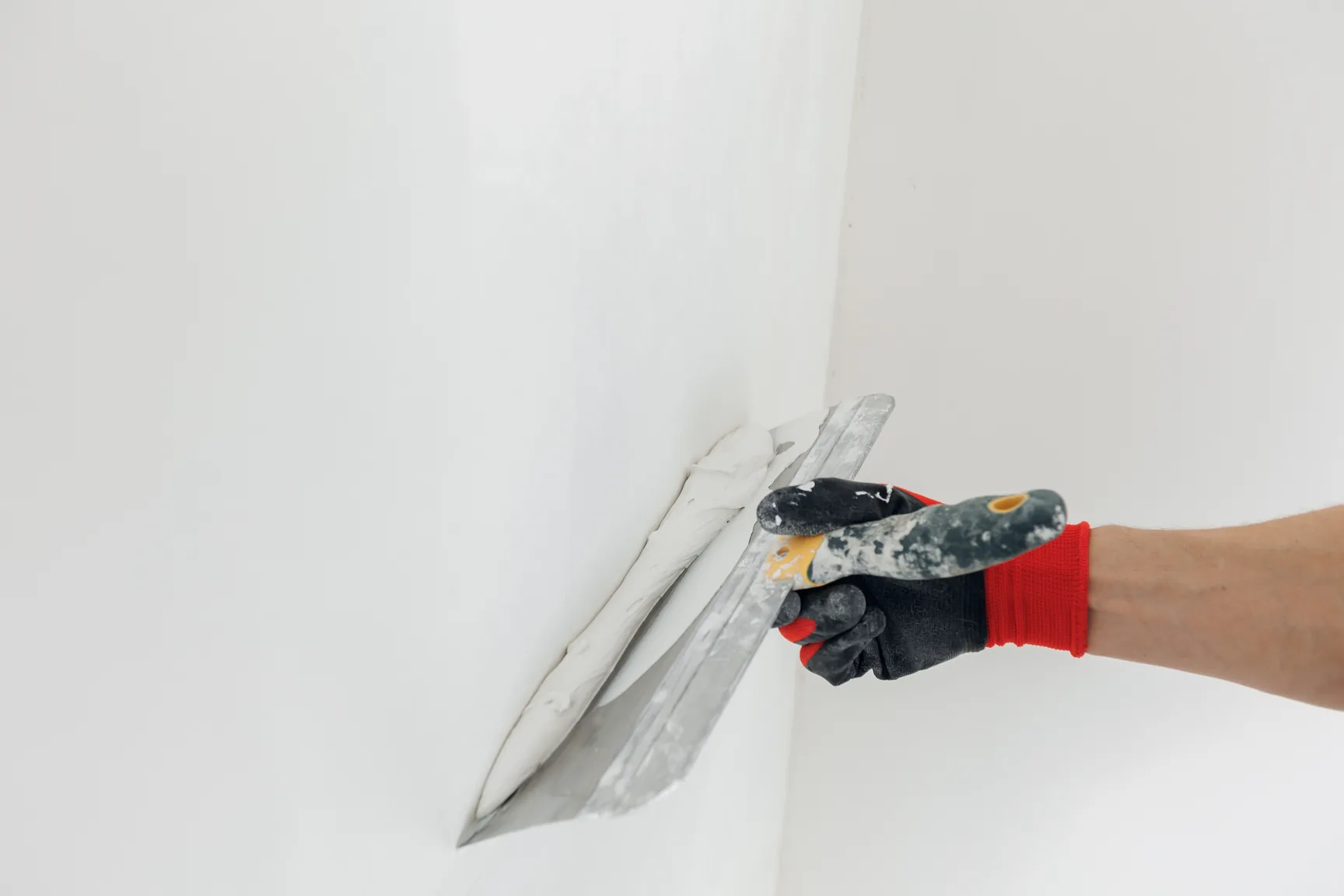
California treats hanging, taping and texturing as licensed trade work: the Contractors State License Board issues a drywall classification, and a business holds it before it bids. Lead-safe renovation certification for paid work on older painted walls comes from EPA, while the California Department of Public Health runs a separate state certification for lead-related construction. The state’s construction asbestos standard names asbestos-containing wallboard and acoustical plaster on ceilings, larger asbestos jobs call for registration first, and the regional air districts add rules of their own. Workers’ compensation is compulsory, and the State Compensation Insurance Fund is among the places an employer can buy it.
How the policies behind a drywall business work in any state is the subject of the drywall contractor insurance page. This page keeps to what is particular to California, whether your crews repair walls in occupied homes, the ground of the residential drywall contractor insurance page, or hang and finish board for general contractors, which the commercial drywall contractor insurance page takes up.
A top-to-bottom flow that follows a drywall job. It starts with the license: the state contractor board issues a drywall classification that covers hanging board, nonstructural metal framing, taping and texture, and the business holds it before it bids, subcontract work included. Next come painted walls in older housing and child care buildings, where the federal agency runs the lead-safe renovation certification and the state health department runs a separate lead-related construction certification. Then comes tear-out: the state’s construction asbestos standard names asbestos-containing wallboard and acoustical plaster on ceilings, and a larger job calls for registration with the state’s workplace safety division before it starts. Where the job sits matters next, because each regional air district writes its own asbestos rule for renovation, and the Bay Area rule is the place joint compound is named. Last comes the crew: workers’ compensation is compulsory, met through a licensed insurer, the state’s own compensation fund or approved self-insurance. No figures are shown.
Licensed before the bid: the board’s drywall classification
California licenses drywall work statewide. The Contractors State License Board issues a drywall contractor classification whose own words cover laying out and installing gypsum wallboard and its assemblies, nonstructural metal framing, and the taping and texturing that finish the wall. Plastering and lath fall under a separate lathing and plastering classification from the same board.
A drywall business that hangs, frames, tapes or textures for pay in California needs a license from the board before it bids, subcontracts included. The board exempts only minor work that needs no building permit and uses no employee labor, and it states the dollar limit in its own words.
Authority: Cal. Code Regs. tit. 16, § 832.09 (C-9 Drywall); Cal. Code Regs. tit. 16, § 832.35 (C-35 Lathing and Plastering); Cal. Bus. & Prof. Code § 7048 (minor work)
The drywall classification reaches further than hanging sheets, and the board’s own words show how far:
“A drywall contractor lays out and installs gypsum wall board and gypsum wall board assemblies, including nonstructural metal framing members, and performs the taping and texturing operations including the application of compounds that adhere to wall board …”
Metal framing that carries no structural load sits inside that definition, so a crew that frames its own soffits and partitions is still doing drywall work. Taping and texture sit inside it too, so a finishing business is not outside the license because it never lifts a sheet.
Plaster and lath belong to a neighboring classification, the lathing and plastering classification, defined by the material that goes on the wall:
“A lathing and plastering contractor coats surfaces with a mixture of sand, gypsum plaster, quick-lime or hydrated lime and water, or sand and cement and water …”
As advice, if your work drifts into veneer plaster, older plaster repairs or lath, read both definitions against what your crews actually do, and ask the board before you bid rather than after a dispute.
Timing is what most often catches a growing subcontractor. The board states it plainly:
“Contractors, including subcontractors, specialty contractors, and persons engaged in the business of home improvement (with the exception of joint ventures and projects involving federal funding) must be licensed before submitting bids.”
The board’s exemption for minor work is narrow, and its bulletin on the most recent change carries the condition that matters to any business with a crew:
“increases the minor work license exemption from $500 to $1,000, but there is a catch: the work cannot require a permit, and the unlicensed person cannot employ anyone for the project.”
The exemption is for a person working alone on work that needs no permit. As advice, a business with even a single helper on the job should plan as a licensed contractor, whatever the size of the patch. Keep the license number on every estimate and subcontract, and remember that a building permit is still a question for the city or county where the job sits; the state license settles who may do the work, not whether the job needs a permit.
The proof of insurance a general contractor asks for before a commercial project is covered on the commercial drywall contractor insurance page, and what a homeowner may ask for before a repair is on the residential drywall contractor insurance page.
Lead paint on the wall: federal and state certificates side by side
California is not an authorized RRP state: EPA administers the lead renovation, repair and painting (RRP) program there, so the lead-safe certification a drywall firm needs for paid work that disturbs paint in older homes, child care facilities and preschools comes from EPA.
Authority: 40 CFR Part 745; Cal. Code Regs. tit. 17, §§ 35001–35050 and 36000–36100
A crew that cuts out a damaged section or sands a patch into an old finish is disturbing whatever paint is on that wall, and the federal rule is written around that kind of paid work:
“In general, anyone paid to perform work that disturbs paint in housing and child-occupied facilities built before 1978 must be certified in lead-safe work practices.”
Some states run that program themselves. The federal agency keeps the list, and California is not on it:
“EPA administers the RRP Program in most Tribes, states and territories, but has authorized the following to operate their own programs: Alabama, Delaware, Georgia, Iowa, Kansas, Massachusetts, Mississippi, North Carolina, Oklahoma, Oregon, Rhode Island, Utah, Vermont, Wisconsin …”
The state is not silent on lead, though. The California Department of Public Health runs its own certification, and it covers different ground.
The California Department of Public Health runs the state’s own Lead-Related Construction certification under state regulations. It reaches lead hazard evaluation and lead abatement in residential and public buildings, and its worker and supervisor certificates are also meant for repainting or general construction on surfaces painted with lead-based paint. Cutting into painted walls can bring the federal rule, the state certification or both into play.
The department’s description of its worker certificate is the sentence closest to a drywall crew’s day, because it reaches past abatement into ordinary construction:
“These certificates are also for those who plan to do repainting or general construction on surfaces painted with lead-based paint.”
As advice, settle a few facts before the estimate is final: when the building went up, whether it is housing, a child care facility or a public building, whether the work is meant to reduce a lead hazard or simply disturbs old paint, and who on your payroll holds which certificate. How a liability policy treats a claim that involves lead is worked through on the general liability page.
Wallboard, ceiling plaster and the regional rules that add joint compound
California’s construction asbestos standard, run by Cal/OSHA, reaches drywall work by name: its definition of Class II asbestos work includes removing asbestos-containing wallboard, and its definition of surfacing material names acoustical plaster on ceilings. A contractor handling a large enough area of asbestos-containing material must register with Cal/OSHA first, and the license law adds an asbestos certification requirement. The air districts’ asbestos rules add surveys, notices and work practices for renovation.
Authority: Cal. Code Regs. tit. 8, § 1529; Cal. Code Regs. tit. 8, § 341.6; Cal. Bus. & Prof. Code § 7058.5; BAAQMD Regulation 11, Rule 2; SCAQMD Rule 1403; 40 CFR 61, Subpart M
The Cal/OSHA (Division of Occupational Safety and Health) runs the construction asbestos standard, and its scope is written for renovation work:
“This section regulates asbestos exposure in all construction work … Construction, alteration, repair, maintenance, or renovation of structures, substrates, or portions thereof, that contain asbestos”
The standard sorts asbestos work into classes. Its definition of the class that covers removal of material other than thermal system insulation and surfacing names wallboard outright:
“means activities involving the removal of ACM which is not thermal system insulation or surfacing material. This includes, but is not limited to, the removal of asbestos-containing wallboard, floor tile and sheeting, roofing and siding shingles, and construction mastics.”
Ceilings come in through the definition of surfacing material, whose examples include acoustical plaster:
“means material that is sprayed, troweled-on or otherwise applied to surfaces (such as acoustical plaster on ceilings and fireproofing materials on structural members, or other materials on surfaces for acoustical, fireproofing, and other purposes).”
The rule’s own words decide the reach, and here they name the material. Cal/OSHA’s construction asbestos standard covers alteration, repair and renovation of structures that contain asbestos, and its definition of Class II asbestos work includes removing asbestos-containing wallboard; its definition of surfacing material names acoustical plaster on ceilings. Neither the standard nor the registration rule names joint compound, drywall or gypsum. The Bay Area air district’s rule does: it lists joint compound among friable materials and plaster among nonfriable ones. The Cal/OSHA texts carry no residential exemption; the air district rules carry their own residential provisions, quoted in their own words.
Note what that statewide standard leaves out. It names wallboard and acoustical plaster, but not joint compound, and a drywall business should read that silence as neither a ruling that joint compound is regulated nor a finding that it is safe.
Larger jobs carry a registration requirement before any work begins, and the license law adds a condition of its own, which the board reprints:
“An employer who will be engaging in asbestos-related work … involving 100 square feet or more of surface area of asbestos-containing material … shall apply for and obtain a registration from the division prior to the commencement of any such work.”
“A contractor shall not engage in asbestos-related work … that involves 100 square feet or more of surface area of asbestos containing materials, unless the contractor holds a C-22 Asbestos Abatement classification or the qualifier for the license passes an asbestos certification examination.”
The air districts are a separate layer, and each writes its rule for its own region rather than for the whole state. At the state level, the California Air Resources Board carries the asbestos NESHAP program for renovation and demolition, alongside the local air districts. Of the district rules in the record, the Bay Area Air Quality Management District rule is where joint compound is named, at the close of its list of friable material:
“Materials that can be crumbled, pulverized, or reduced to powder, when dry, by hand pressure. These include, but are not limited to, sprayed-on or troweled-on fireproofing, acoustic ceiling material and ceiling tiles …”
“asbestos-containing paper and joint compound.”
The same district waives the survey for small residential buildings, but not the sampling of the finishes a drywall crew most often disturbs:
“For renovation or demolition of residential buildings having four or fewer dwelling units, a survey is not required.”
“A sample and test of the material will be required only when any of the following will be removed or disturbed: … acoustic ceiling material or acoustic plaster; textured or skim coated wall surfaces”
The South Coast Air Quality Management District rule sets aside an owner-occupant who personally renovates a single-unit home, and a hired drywall crew is not that owner:
“The provisions of this rule shall not apply to an owner-occupant of a residential single-unit dwelling who personally conducts a renovation activity at that dwelling.”
As advice, do not carry one district’s rule into another region; where a job sits outside the districts quoted here, look up that district’s own rule at the bidding stage. On any tear-out of older wallboard or ceiling finish, ask for the survey or sample results before you price the demolition, and if regulated material has to come out and your business is not registered and certified for it, schedule a contractor who is ahead of your crew. Whether a liability policy responds to an asbestos claim is a policy question, taken up on the general liability page.
A compulsory comp law, a public fund and the board’s certificate on file
Workers’ compensation is compulsory in California, and the Division of Workers’ Compensation says it applies even to an employer with a single employee. An employer buys a policy from a licensed insurer, insures through the state’s own compensation insurance fund, or qualifies to self-insure with the approval of the Department of Industrial Relations.
Authority: Cal. Lab. Code § 3700; Cal. Ins. Code §§ 11770, 11773
The statute opens with the duty itself, and the only employer it leaves out is the state:
“Every employer except the state shall secure the payment of compensation in one or more of the following ways:”
The Division of Workers’ Compensation makes plain that a small payroll is no exception:
“California employers are required by law to have workers' compensation insurance, even if they have only one employee.”
The private-market route is the one the division’s fact sheet spells out:
“Purchase a policy through an agent or broker from any licensed insurer authorized to write policies in California.”
The State Compensation Insurance Fund is the other route to a policy, and its statute describes a public fund rather than a private company:
“The State Compensation Insurance Fund is continued in existence, to be administered by its board of directors for the purpose of transacting workers’ compensation insurance”
“The fund shall be organized as a public enterprise fund.”
The license adds a second layer. Licensing ties into it: the Contractors State License Board keeps a workers’ compensation certificate, a self-insurance certificate or a no-employee exemption on file for every licensee, and the classifications it requires to carry the insurance whether or not they have employees do not include drywall. The license law puts the filing requirement this way:
“the board shall require as a condition precedent to the issuance, reinstatement, reactivation, renewal, or continued maintenance of a license, that the applicant or licensee have on file at all times a current and valid Certificate of Workers’ Compensation Insurance or Certification of Self-Insurance”
The board also lists the classifications that must carry the coverage regardless of payroll:
“All active C-8 Concrete contractors, C-20 Warm-Air Heating, Ventilating and Air-Conditioning contractors, C-22 Asbestos Abatement contractors, C-39 Roofing contractors, and/or C-61/D-49 Tree Service contractors are required to carry workers' compensation insurance …”
Drywall is not on that list. That does not make workers’ compensation optional for a drywall business that employs people, because the compensation law applies to employers. It means only that the license does not force the coverage on a drywall licensee with no employees.
Hangers paid by the board, finishers paid by the job and crews working under a separate business name all raise the question of who counts as an employee, and the workers’ compensation page works through it. As advice, settle how each person on a job is paid and documented before the audit asks.
Which California office answers which question
The California Department of Insurance regulates insurance in the state. You can look up an insurance agency’s license, ours included, on NIPR.com. The other bodies this page draws on each hold a piece of the picture, with each role as the record verified it:
- Contractors State License Board: statewide contractor licensing, including the drywall and the lathing and plastering classifications
- California Department of Industrial Relations: parent department of the workers’ compensation and workplace safety divisions; approves self-insurance
- Division of Workers’ Compensation: workers’ compensation administration and dispute resolution
- Cal/OSHA (Division of Occupational Safety and Health): construction asbestos standard and asbestos contractor registration
- California Air Resources Board: asbestos NESHAP program for renovation and demolition, alongside the local air districts
- California Department of Public Health: state Lead-Related Construction certification (Childhood Lead Poisoning Prevention Branch); RRP itself is EPA-administered
The air districts are not listed because each covers its own region, and no statewide list can name the local building department where a job sits.
The largest metro areas and the counties inside each
The metro areas below are the largest metropolitan areas whose principal cities are in California, as the U.S. Census Bureau delineates them. The contractor license is statewide, so it travels with a crew across every county on these cards; as advice, expect the permit office, the inspector and the air district to change when a crew crosses a county line.
Los Angeles-Long Beach-Anaheim, CA
California counties in this metro: Los Angeles County and Orange County.
Riverside-San Bernardino-Ontario, CA
California counties in this metro: Riverside County and San Bernardino County.
San Francisco-Oakland-Fremont, CA
California counties in this metro: Alameda County, Contra Costa County, Marin County, San Francisco County and San Mateo County.
San Diego-Chula Vista-Carlsbad, CA
California counties in this metro: San Diego County.
Sacramento-Roseville-Folsom, CA
California counties in this metro: El Dorado County, Placer County, Sacramento County and Yolo County.
San Jose-Sunnyvale-Santa Clara, CA
California counties in this metro: San Benito County and Santa Clara County.
Where the coverage pages pick up
The findings above describe where California’s rules sit. The insurance that answers for the work itself is the set of policies a drywall business carries wherever it works:
- General liability for injury and damage to others, during the job and after the room is back in use.
- Workers’ compensation for the crew, including how piece-rate hangers and finishers are counted.
- Business vehicles that haul board, mud and lifts to the job, on the commercial auto page.
- Inland marine coverage for tools and equipment for the lifts, banjos, flat boxes and sanders that travel from job to job.
- Umbrella liability for limits above the primary liability policies, which a general contractor’s subcontract often asks for.
- The shop and what is kept in it, on the commercial property page.
When you are ready to put the pieces together for California work, a quote request is the place to start.
State rules decide who may do the work and how; the policies decide who pays when something goes wrong.
- A license, registration or certification is a requirement of the state, not insurance.
A panel for California in rows. Each row sets a requirement of the state beside the exposure that requirement leaves open and the coverage line that answers it. Contractor license: A state license or registration reaches drywall work. It leaves open injury and damage to others from the work, during the job and after it, which General Liability answers. Lead-safe renovation: The federal program runs lead-safe renovation here. It leaves open paint dust disturbed when older walls are cut, patched or sanded, which General Liability answers. Asbestos in wall and ceiling material: A state program reaches removal of this material. It leaves open disturbing older joint compound, wallboard or plaster, which General Liability answers. Workers’ compensation: Required for covered employers, from the open market or the state fund. It leaves open a crew member hurt on the job, which Workers’ Compensation answers. Notes: A license, registration or certification is a requirement of the state, not insurance. The conclusion reads: State rules decide who may do the work and how; the policies decide who pays when something goes wrong. No figures are shown.
California coverage, services and state offices
What we insure
Coverage lines
California drywall contractor insurance questions
My crew only tapes, finishes and sprays texture. Is that still licensed work in California?
Yes. The Contractors State License Board writes its drywall classification around installing wallboard and its assemblies, nonstructural metal framing included, and around the taping and texturing that finish the wall. A business that tapes and textures for pay is doing work the classification describes.
We sub to general contractors on commercial projects. Can we wait to get licensed until we win a bid?
No. The Contractors State License Board says contractors, including subcontractors and specialty contractors, must be licensed before submitting bids. Plan on holding the license before the estimate goes out, not after the award.
We mostly do small patch jobs. Is there an exception that would let us skip the license?
The board exempts minor work only when the job needs no building permit, the person doing it employs no one on the project, and the total stays under a dollar limit the board states on its own pages. As advice, a business that sends a crew of any size is outside that exemption, so treat the license as a requirement.
Does a certificate from the California Department of Public Health take the place of the federal lead-safe renovation certificate?
No. EPA administers the lead renovation, repair and painting program in California, so that certification comes from EPA. The California Department of Public Health runs a separate state Lead-Related Construction certification, and its worker and supervisor certificates are also meant for repainting or general construction on surfaces painted with lead-based paint. A job that cuts into old painted walls can bring both into play.
Before we scrape an old acoustic ceiling, who decides whether it gets sampled for asbestos?
It depends partly on where the job is. The state’s construction asbestos standard covers renovation of structures that contain asbestos, and it names acoustical plaster on ceilings as surfacing material. On top of that, each air district sets its own renovation rule; the Bay Area Air Quality Management District rule requires a sample and test when acoustic ceiling material or textured or skim coated wall surfaces will be disturbed, even on small residential buildings that need no survey. Ask for the results before you price the work.
We have no employees yet. What does the license board want on file about workers’ compensation?
The Contractors State License Board keeps a workers’ compensation certificate, a certificate of self-insurance or a no-employee exemption on file for every licensee. Its list of classifications that must carry the coverage whether or not they have employees does not include drywall. Once you hire, the state’s compensation law reaches you like any other employer.
If we move our workers’ compensation away from a private insurer, what other routes does California allow?
An employer can buy a policy from a licensed insurer, insure through the State Compensation Insurance Fund, or qualify to self-insure with the approval of the California Department of Industrial Relations. The Division of Workers’ Compensation administers the system.
Where can I confirm that the agency quoting my insurance holds a license?
The California Department of Insurance regulates insurance in the state. You can also look up an insurance agency’s license, ours included, on NIPR.com.
This page describes insurance for drywall contractors operating in this state. It is general information, not legal advice and not a statement of coverage. Licensing, lead-safe and asbestos requirements change; verify current requirements with the agency named before relying on them.
Get a quote for your California drywall work
Tell us which California counties your crews work in, whether you hang new board or open up older walls, and who draws a paycheck, and we will shape the program around that.