
Drywall Contractor Insurance by State
Arizona Drywall Contractor Insurance
An Arizona drywall business holds a specialty license from the state before it bids, works under federal lead and asbestos rules when it opens older walls, and insures its crew under a compulsory workers’ compensation law.
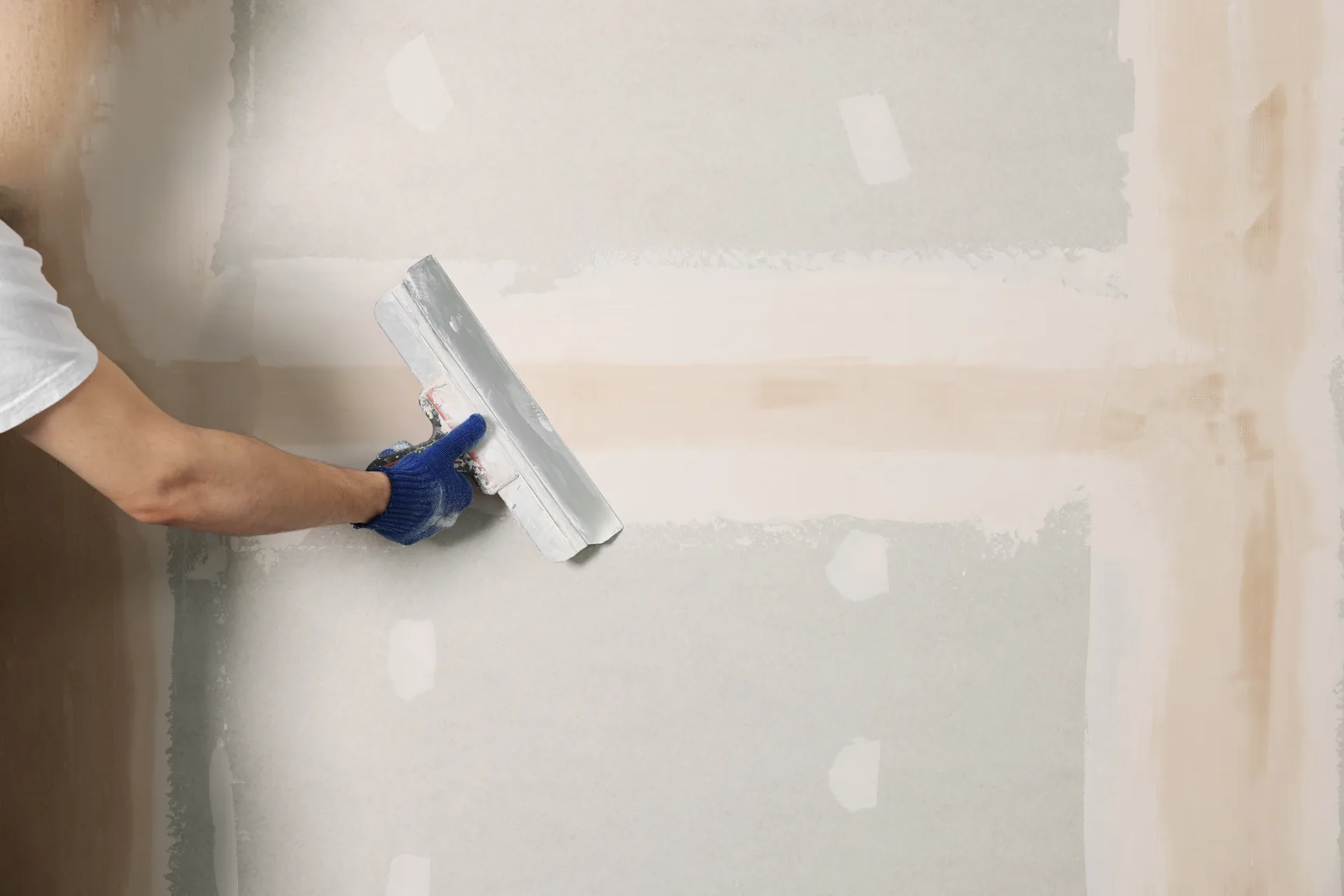
Arizona puts drywall work under a statewide contractor license: the Arizona Registrar of Contractors issues a drywall specialty license for residential work, for commercial work or for both, and a business holds it before it bids, subcontract work included. Lead-safe renovation certification for paid work on older painted walls comes from EPA, not from a state program. Tear-out falls under the federal asbestos rule, which an Arizona statute ties the state to, and workers’ compensation is compulsory, secured through an authorized insurer or approved self-insurance, with no state fund.
Each section below gives a finding as the record verified it, the source’s own words where they settle the point, and advice for an owner running crews. How the policies fit together for a drywall business in any state is set out on the drywall contractor insurance page; work inside occupied homes is the ground of the residential drywall contractor insurance page, and subcontracts on builders’ projects that of the commercial drywall contractor insurance page.
A stack of layers, read from top to bottom, each narrower than the layer above it. At the top is the contractor law, which reaches anyone who for pay builds, alters, repairs or improves a building or does any part of that work, and which names subcontractors and specialty contractors among the contractors it licenses. Below it is specialty contracting, work that takes a specialized construction trade, split between work inside residential property lines and commercial work. Below that are the licensing agency’s drywall licenses: a residential license covering wallboard, ceiling grid that supports it, movable partitions, tape and texture and lightweight steel partitions; a commercial license for drywall work outside residential property lines; and a dual license that allows the scopes of the residential and commercial licenses together. At the bottom, set apart from the drywall licenses, is the plastering classification for lath and plaster. No figures are shown.
Residential, commercial or dual: choosing the drywall license that fits your work
Arizona licenses drywall work statewide through the Registrar of Contractors. The state’s contractor law reaches anyone who, for pay, builds, alters, repairs or improves a building or does any part of that work, and it names subcontractors and specialty contractors among the contractors it licenses. The license classes it sets out include specialty contracting for work that takes a specialized construction trade, on residential property, on commercial property or both. The Registrar’s own classification list sets out a drywall specialty license for residential work, one for commercial work and a dual license for both, and a separate plastering classification for lath and plaster.
A drywall business that hangs, frames, tapes or finishes for pay in Arizona needs a contractor’s license from the Registrar before it bids or works, subcontracts included. The law exempts only small, casual or minor jobs that need no local building permit, and it states its own dollar limit for them.
Authority: A.R.S. § 32-1101(A)(3); A.R.S. § 32-1102; A.R.S. § 32-1151; A.R.S. § 32-1121(A)(14)
The statute starts from the prohibition. Contracting without a license is not a paperwork lapse in Arizona; the law calls it unlawful:
“It is unlawful for any person, firm, partnership, corporation, association or other organization, or a combination of any of them, to engage in the business of … a contractor without having a contractor's license in good standing”
Who counts as a contractor is drawn wide, and the last clause of the definition matters most to a trade like drywall, because a crew rarely builds the whole of anything:
“Construct, alter, repair, add to, subtract from, improve, move, wreck or demolish any building, highway, road, railroad, excavation or other structure, project, development or improvement, or to do any part thereof”
“Includes subcontractors, specialty contractors, floor covering contractors, hardscape contractors …”
That closes off a common assumption. A drywall business that works only for builders and never signs with an owner is still a contractor under the law, and the general contractor’s license does not stand in for its own.
Within the specialty classes, the Arizona Registrar of Contractors lists the drywall trade by name. Its residential listing shows how far the license reaches beyond hanging sheets:
“R-10 Drywall This classification allows the licensee to install and repair: 1. Gypsum wall board 2. Ceiling grid systems as supporting members for gypsum drywall 3. Movable partitions 4. Wall board tape and texture 5. Non-load bearing, lightweight, steel wall partitions”
Tape and texture are inside it, so a finishing business does not fall outside the license because it never lifts board. For a business that works on both sides of the residential property line, the agency lists a dual license:
“CR-10 Drywall This classification allows the scopes of work permitted by the commercial C-10 Drywall and the residential R-10 Drywall licenses.”
Lath and plaster sit in a separate plastering classification, as the finding above notes. As advice, sort a season of your jobs by where they sat before you choose: if commercial work shows up beside the houses, the residential license alone may not fit the business you run. If your crews take on veneer plaster or older plastered walls, ask the Arizona Registrar of Contractors which license that work calls for before you bid it.
Small jobs, building permits and where the exemption runs out
Arizona’s contractor law carries an exemption for small work, and it is the part of the statute most often misread. Its dollar limit is the statute’s, in the statute’s words:
“Any person other than a licensed contractor engaging in any work or operation on one undertaking or project by one or more contracts, for which the aggregate contract price … is less than $1,000.”
The statute then narrows it by the kind of work, and lists cases where it does not apply:
“The work or operations that are exempt under this paragraph shall be of a casual or minor nature. This exemption does not apply:”
“In any case in which the performance of the work requires a local building permit.”
Read together, those lines describe occasional, minor work that needs no permit. They do not describe a drywall business that patches, hangs and finishes for pay as its ordinary trade.
As advice, treat the permit question as a separate step on every job. Cities and counties issue the building permits, and a job that needs a permit is outside the exemption whatever its price. The proof of license and insurance a general contractor asks for before a commercial project is taken up on the commercial drywall contractor insurance page.
Sanding and cutting old paint: certification from the federal side
Arizona is not an authorized RRP state: EPA administers the lead renovation, repair and painting (RRP) program there, so the lead-safe certification a drywall firm needs for paid work that disturbs paint in older homes and child-occupied facilities comes from EPA. EPA also runs the separate lead-based paint activities program (inspection, risk assessment and abatement) in Arizona.
Authority: 40 CFR Part 745
The federal agency publishes the list of states it has authorized to run their own renovation programs, and Arizona is not on it:
“EPA administers the RRP Program in most Tribes, states and territories, but has authorized the following to operate their own programs: Alabama, Delaware, Georgia, Iowa, Kansas, Massachusetts, Mississippi, North Carolina, Oklahoma, Oregon, Rhode Island, Utah, Vermont, Wisconsin …”
The rule’s reach is set by the kind of building and the fact of being paid, not by the size of the business:
“In general, anyone who is paid to perform work that disturbs paint in housing and child-occupied facilities built before 1978 must be certified. This includes all firms, even sole proprietorships.”
“Firms cannot advertise or perform renovation activities covered by the RRP Rule in homes or child-occupied facilities built before 1978 without firm certification.”
The Arizona Department of Health Services runs the state’s childhood lead poisoning prevention work, including blood lead testing guidance and surveillance reports; neither the renovation certification nor abatement licensing comes from the state, so a crew that cuts, sands or tears out painted walls in an older building answers to the federal rule.
Drywall work disturbs paint more often than owners expect: cutting out a damaged section, opening a wall for a doorway and sanding a patch flush all touch whatever coating is on that wall. As advice, put the building’s age on the estimate sheet and name the certified renovator who will be on the job. How a liability policy treats a claim involving lead is a separate question, worked through on the general liability page.
Tear-out under the federal asbestos rule, and a county that names drywall
Asbestos in renovation and demolition is regulated in Arizona under the federal asbestos NESHAP, which an Arizona statute directs the state’s environmental director to adopt and enforce, and which the Maricopa County Air Quality Department enforces in its county. The rule never names drywall or joint compound: it reaches them through its categories, friable material and nonfriable material that renovation is likely to crumble or pulverize, and a regulated renovation needs written notice before it starts. The rule’s definition of a covered facility excludes residential buildings with a small number of dwelling units. The county’s own guidance says removing or replacing drywall is renovation.
Authority: 40 CFR 61.141; 40 CFR 61.145(b); 40 CFR 61, Subpart M; A.R.S. § 49-426.03(B)(5)
The rule never lists wall materials by name. It works through definitions, and the first is what makes material friable:
“means any material containing more than 1 percent asbestos … that, when dry, can be crumbled, pulverized, or reduced to powder by hand pressure.”
Material that does not crumble by hand can still come under the rule when the work is likely to break it down, and cutting, breaking and sanding are exactly the forces a tear-out applies:
“Category II nonfriable ACM that has a high probability of becoming or has become crumbled, pulverized, or reduced to powder by the forces expected to act on the material in the course of demolition or renovation operations …”
The rule then defines the work and the buildings it reaches. The exclusion inside the second definition is the line many residential jobs fall on:
“means altering a facility or one or more facility components in any way, including the stripping or removal of RACM from a facility component.”
“means any institutional, commercial, public, industrial, or residential structure, installation, or building (including any structure, installation, or building containing condominiums or individual dwelling units operated as a residential cooperative, but excluding residential buildings having four or fewer dwelling units) …”
A regulated renovation starts with paperwork, before the first sheet comes down:
“Provide the Administrator with written notice of intention to demolish or renovate.”
Arizona’s link to the federal rule is set by statute, which directs the state’s environmental director to adopt the federal hazardous air pollutant standards as written:
“When the administrator adopts and makes effective standards pursuant to section 112(d) or 112(f) of the clean air act the director shall adopt those standards in the same manner as prescribed by the administrator.”
The Arizona Department of Environmental Quality is the state’s environmental agency. The county agency in the directory below enforces the rule in its own county, and its guidance is where drywall is named. What follows is agency guidance, not the text of the rule:
“Removing or replacing drywall is renovation.”
“Stripping, removing, replacing, or repairing ceiling texture is renovation.”
“Any single-family residence that is used or ever has been used for commercial, institutional, or industrial purposes”
That guidance does not say a given wall contains asbestos; an inspection decides that. As advice, ask for inspection results before you price a tear-out, find out how a house has been used, since a commercial past can bring it under the rule, and learn who files notice for the county where the job sits. Older ceiling texture is among the reasons the residential drywall contractor insurance page spends time on testing.
An insurer or proof of the means to pay: the only routes the law accepts
Workers’ compensation is compulsory in Arizona for every employer that regularly employs workers in its business. The employer secures it either by insuring with a carrier authorized by the state’s insurance department or by proving to the Industrial Commission of Arizona that it can pay compensation directly or through an approved pool, and the law allows no other mechanism. Coverage comes from the open market; there is no state fund.
Authority: A.R.S. § 23-902(A)–(B); A.R.S. § 23-961(A)–(B); A.R.S. § 23-907(A); A.R.S. § 23-906(B); A.R.S. § 41-3012.19; Laws 2010, ch. 268, § 4
The law binds every business that regularly employs workers, and it lists the ways an employer meets the requirement:
“Employers subject to this chapter are the state, each county, city, town, municipal corporation and school district and every person who employs any workers or operatives regularly employed in the same business or establishment under contract of hire …”
“By insuring and keeping insured the payment of such compensation with an insurance carrier authorized by the director of the department of insurance and financial institutions to write workers' compensation insurance in this state.”
“By furnishing to the commission satisfactory proof of financial ability to pay the compensation directly or through a workers' compensation pool approved by the commission …”
Then it closes the list:
“An employer may not secure compensation to comply with this chapter by any mechanism other than as provided in this section.”
That sentence rules out the informal arrangements a small business sometimes reaches for, such as money set aside for injuries or a promise to cover a worker’s bills. Arizona once had a state fund. It is gone, and the mutual insurer formed to succeed it is, by the session law’s own words, not an agency or public entity of the state; it operates like any authorized mutual insurer. Every policy comes from the open market, through a carrier the insurance department authorizes, or the employer qualifies to self-insure.
An employer that fails to secure compensation loses the protection of the workers’ compensation law, can be sued by an injured employee, and cannot defend on assumption of risk or contributory negligence. For drywall contractors working under others, the law also treats a contractor and its subcontractors’ employees as employees of the original employer when that employer retains supervision or control over work that is part of its business.
“In such action the defendant shall not avail himself of the defenses of assumption of risk or contributory negligence.”
When a subcontractor’s hanger is counted as your employee
The second half of that finding matters to every drywall business that hires out part of its work or works under someone else:
“then the contractors and the contractor's employees, and any subcontractor and the subcontractor's employees, are, within the meaning of this section, employees of the original employer.”
The condition is supervision or control over work that is part of the original employer’s business. A drywall contractor that brings in a finishing crew under its own direction is the kind of employer the provision has in view, and so is a general contractor that runs your crew on its project. As advice, collect a current workers’ compensation certificate from every subcontractor before it starts, write down how each person on a job is paid and who directs the work, and keep your own certificate ready for the general contractor who asks.
Crews paid by the board and the audit that follows each policy year are taken up on the workers’ compensation page. Nothing verified here crosses a state line.
A short directory of the state and county bodies involved
The Arizona Department of Insurance and Financial Institutions regulates insurance in Arizona and authorizes the carriers that write workers’ compensation. You can look up an insurance agency’s license, ours included, on NIPR.com. The other bodies on this page are listed with their roles as the record verified them:
- Arizona Registrar of Contractors: statewide contractor licensing, including specialty contractors
- Industrial Commission of Arizona: workers’ compensation administration and self-insurance approval
- Maricopa County Air Quality Department: asbestos renovation and demolition notification and enforcement within Maricopa County
- Arizona Department of Health Services: childhood lead poisoning prevention and blood lead surveillance; renovation certification and lead-based paint activities are EPA-administered in Arizona
Not listed are the city and county building departments that issue permits, and in an ordinary week they are the offices your crews meet most.
Census metro areas where a statewide license meets local permits
The cards below name the largest metropolitan areas whose principal cities are in Arizona, as the U.S. Census Bureau delineates them. The state license applies across all of them alike, while building permits come from the city or county where each job sits.
Phoenix-Mesa-Chandler, AZ
Arizona counties in this metro: Maricopa County and Pinal County.
Tucson, AZ
Arizona counties in this metro: Pima County.
Prescott Valley-Prescott, AZ
Arizona counties in this metro: Yavapai County.
Lake Havasu City-Kingman, AZ
Arizona counties in this metro: Mohave County.
Yuma, AZ
Arizona counties in this metro: Yuma County.
Flagstaff, AZ
Arizona counties in this metro: Coconino County.
What the license, the payroll and the tear-out mean for your policies
The findings above say where Arizona’s rules sit. The insurance that answers for the work is the set of policies a drywall business carries wherever it works, and each has its own page:
- General liability for injury and damage to others, during the job and after the wall is finished.
- Workers’ compensation for the crew and the questions a subcontractor’s workers raise.
- Commercial auto for the vans that haul board, mud and lifts.
- Inland marine coverage for tools and equipment for lifts, taping tools and sanders that move between jobs.
- Umbrella liability for limits above the primary policies, often written into a subcontract.
- Commercial property for the shop and what is kept in it.
Which of those carry the most weight depends on the license you hold and the work behind it. When you are ready to set the pieces against your Arizona work, a quote request is the place to start.
State rules decide who may do the work and how; the policies decide who pays when something goes wrong.
- A license, registration or certification is a requirement of the state, not insurance.
A panel for Arizona in rows. Each row sets a requirement of the state beside the exposure that requirement leaves open and the coverage line that answers it. Contractor license: A state license or registration reaches drywall work. It leaves open injury and damage to others from the work, during the job and after it, which General Liability answers. Lead-safe renovation: The federal program runs lead-safe renovation here. It leaves open paint dust disturbed when older walls are cut, patched or sanded, which General Liability answers. Asbestos in wall and ceiling material: A state program reaches removal of this material. It leaves open disturbing older joint compound, wallboard or plaster, which General Liability answers. Workers’ compensation: Required for covered employers, bought in the open market. It leaves open a crew member hurt on the job, which Workers’ Compensation answers. Notes: A license, registration or certification is a requirement of the state, not insurance. The conclusion reads: State rules decide who may do the work and how; the policies decide who pays when something goes wrong. No figures are shown.
Nearby states we also write
Arizona coverage, services and state offices
What we insure
Coverage lines
Arizona drywall contractor insurance questions
We hang board in new houses and also finish tenant space in office buildings. Which drywall license fits that mix?
The Arizona Registrar of Contractors lists a drywall license for residential work, another for commercial work and a dual license that allows the scopes of both. A business that works on both sides of that line would look at the dual license. Confirm the fit with the Arizona Registrar of Contractors before you apply, and before you bid work on the side your current license does not reach.
Does the GC’s license cover the drywall crew it brings onto a project?
Not by the statute’s terms. Arizona’s contractor law counts subcontractors and specialty contractors as contractors, and it makes it unlawful to engage in the business of a contractor without a license in good standing. As advice, hold your own license from the Arizona Registrar of Contractors before you take a subcontract, whatever license the general contractor holds.
The city says our patch job needs no building permit. Does that change anything on the licensing side?
It is part of the test, not the whole of it. The statute’s small-job exemption reaches only work of a casual or minor nature under a dollar limit the statute states, and it does not apply where the work requires a local building permit. As advice, a drywall business that patches walls for pay week after week should plan on holding a license rather than leaning on the exemption job by job.
Our renovator certificate came from a federal course. Is there an Arizona version we also need?
No. EPA administers the lead renovation, repair and painting program in Arizona, and also runs the lead-based paint activities program there. The Arizona Department of Health Services works on childhood lead poisoning prevention, not renovator or firm certification. Keep the firm certification current as well as each renovator’s.
Before we tear out old wallboard in a commercial building, do we have to tell anyone?
The federal asbestos rule requires written notice of intention to renovate before a regulated renovation starts. Whether a given tear-out is regulated turns on the building and the material, so get the material inspected and ask the agency for the county where the job sits. The Maricopa County Air Quality Department, for its county, says in its guidance that removing or replacing drywall is renovation.
We mostly work in small rental houses. Does the federal asbestos notice rule reach those jobs?
Often not by its own definition. The rule’s definition of a facility leaves out residential buildings below a dwelling-unit count it states. The Maricopa County Air Quality Department says in its guidance that a single-family residence used now or before for commercial, institutional or industrial purposes is among the residential projects the rule reaches. As advice, ask how the house has been used before you price the tear-out.
A worker employed by our own subcontractor was hurt on a job we run. Could the law count him as our employee?
It can. Arizona’s compensation law treats a contractor and its subcontractors’ employees as employees of the original employer when that employer keeps supervision or control over work that is part of its business. As advice, collect a current certificate from every subcontractor before it starts, and keep it with the job file.
Could we skip a workers’ compensation policy and set money aside for injuries instead?
Not on your own say-so. The law allows an employer to secure compensation only through an insurance carrier authorized by the Arizona Department of Insurance and Financial Institutions or by proving to the Industrial Commission of Arizona that it can pay compensation directly or through an approved pool, and it allows no other mechanism. An employer that fails to secure compensation can be sued by an injured employee and cannot defend on assumption of risk or contributory negligence.
This page describes insurance for drywall contractors operating in this state. It is general information, not legal advice and not a statement of coverage. Licensing, lead-safe and asbestos requirements change; verify current requirements with the agency named before relying on them.
Get a quote for your Arizona drywall work
Tell us whether your license is residential, commercial or dual, which counties your crews work in and how your payroll and subcontractors are set up, and we will build the program from there.