
Drywall Contractor Insurance by State
Louisiana Drywall Contractor Insurance
Louisiana’s contractors board names drywall among its commercial subclassifications and reaches home jobs through its residential and home improvement lines, beside federal lead rules, a state asbestos rule and compulsory comp.
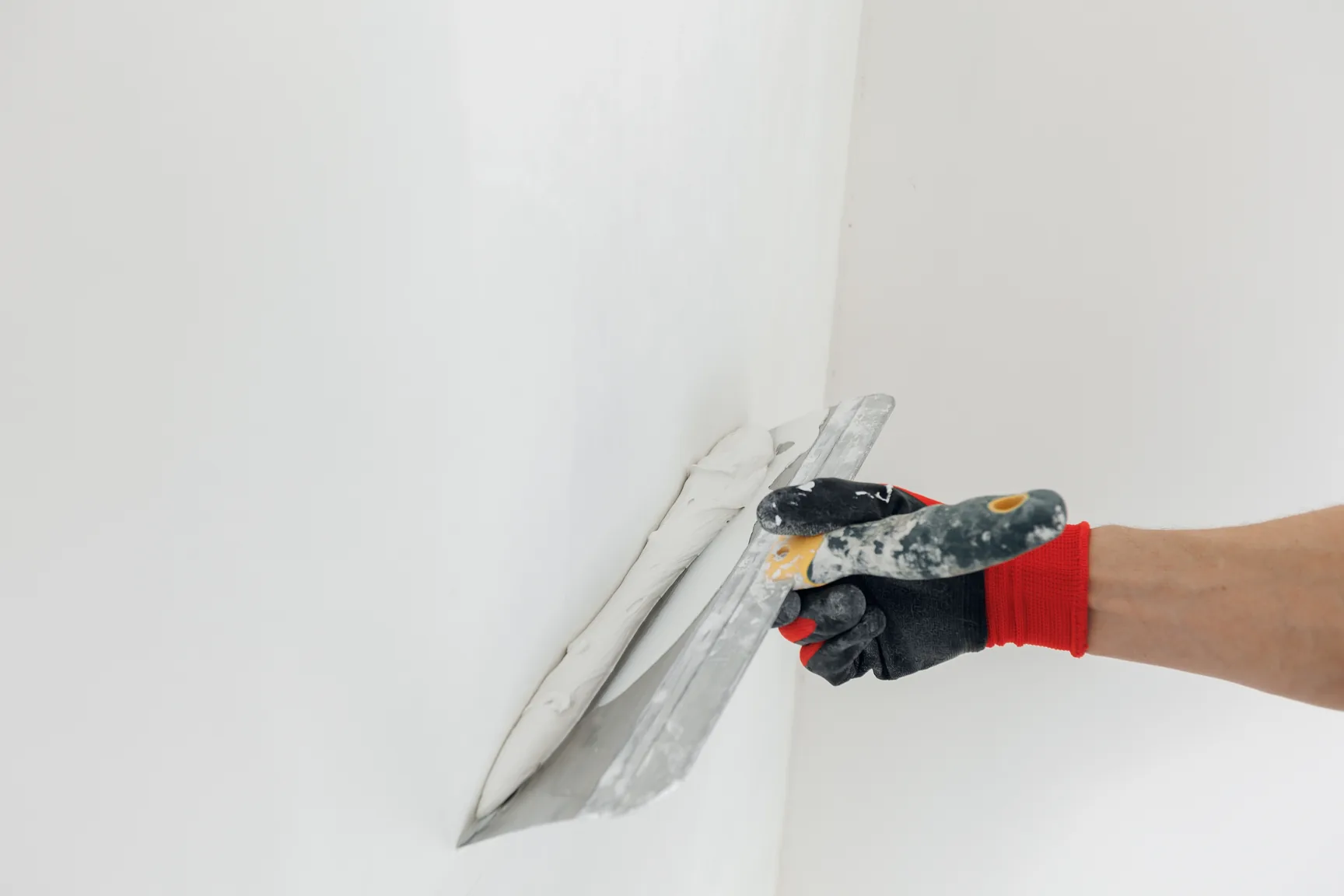
Louisiana writes drywall into its statewide contractor licensing by name. The Louisiana State Licensing Board for Contractors lists Drywall as a subclassification of Building Construction, and its commercial license reaches subcontractors and specialty trades on commercial projects at or above a value the board prints. On homes the trade is reached differently, through the residential construction license and the home improvement classification, whose words never name drywall. Lead-safe renovation certification comes from EPA, the Louisiana Department of Environmental Quality enforces an asbestos rule that reaches renovation wherever regulated material is disturbed, and workers’ compensation is compulsory, met through an insurer or approved self-insurance because there is no state fund.
The question that sorts most of this is what kind of building the wall stands in, and who hired you. A commercial tenant finish, a new house for a licensed builder and a repair a homeowner calls about directly each sit under a different line in the state’s law. How the policies themselves work is set out on the drywall contractor insurance page; work in occupied homes is the subject of the residential drywall contractor insurance page, and board hung on contractors’ projects is the subject of the commercial drywall contractor insurance page.
A comparison in columns, read left to right. The left column is commercial projects. The State Licensing Board for Contractors names Drywall as a subclassification of Building Construction, covering gypsum board products and their finishes but not the studs or framing behind them, and it lists subcontractors and specialty trades on commercial projects at or above the value it prints among those who need its license. The board’s line does not say whether that value is the subcontract or the whole project, so the column ends with a question for the board. The middle column is residential construction. That license reaches residential work above the value the statute prints and never names drywall, and a subcontractor working for a residential construction license holder is exempt in the statute’s words. The right column is home improvement: repair, renovation and alteration of an existing home in the band the statute prints, reached through those category words rather than the word drywall. The board’s rule asks residential and home improvement licensees to carry workers’ compensation and general liability insurance. No figures are shown.
Gypsum board and its finishes: the trade the contractors board writes down by name
Louisiana licenses contractors statewide through the State Licensing Board for Contractors, and Drywall is one of the board’s named subclassifications of Building Construction: the installation, maintenance or repair of gypsum board products and their finishes, not the studs or framing behind them. Lathing, Plastering and Stuccoing is a separate subclassification. The board says a commercial license is needed for commercial projects at or above the value it prints, and it lists subcontractors and specialty trades on commercial projects among those who need one.
Authority: La. R.S. 37:2150.1; La. R.S. 37:2156.1; La. R.S. 37:2157(A)(17); La. R.S. 37:2160; La. R.S. 37:2163; LAC 46:XXIX.105; LAC 46:XXIX.301
The board’s list describes the drywall classification in words a hanger or a taper would recognize, and it draws the line at the framing:
“The installation, maintenance, or repair of gypsum board products and their associated finishes. It does not include installation of wood or metal studs and framing. Drywall is a subclassification of Building Construction.”
That exclusion matters for a crew that sets metal studs before it hangs board. As advice, a firm that frames as well as hangs should ask the board, before bidding a job with both, which part of the classification list covers the framing, and whether the broader Building Construction heading fits its work better.
Commercial jobs, the value line the board prints, and the question to ask it
The board’s page on license types sets out when the commercial license applies. It prints a value line for commercial projects:
“Commercial projects with a value of $50,000 or more (including labor and materials) when the property is to be used for commercial purposes.”
On the same page, it lists subcontractors and specialty trades among those the commercial license reaches:
“Subcontractors/Specialty Trades for commercial projects with a value of $50,000 or more.”
Those two lines leave something open. The subcontractor line does not say whether the printed value is measured on the subcontract a drywall firm signs or on the whole project its work is part of. This page does not decide that, and neither should a crew lead at the bid table. As advice, ask the Louisiana State Licensing Board for Contractors how it measures the value for a subcontractor, and keep its written answer with your commercial bids.
The proof of insurance a general contractor asks for before a commercial project is taken up on the commercial drywall contractor insurance page.
Houses: the residential license, home improvement work and the exempt subcontractor
On homes the picture changes. New residential construction and larger residential jobs above the printed value need the residential construction license, which does not name drywall, and repair or remodeling of an existing home in the band the statute prints is home improvement work under its own classification. A drywall subcontractor working for a residential construction license holder is exempt from licensure by statute. A local building department may not issue a permit to anyone without an active license in the right classification, parishes and municipalities may add requirements that are not less stringent than the state’s, and the board’s rules require residential and home improvement contractors to carry workers’ compensation and general liability insurance.
Work on an existing home is defined by category words, and drywall work falls inside the Home Improvement definition through those words rather than by name:
“means the reconstruction, alteration, renovation, repair, modernization, conversion, improvement, removal, or demolition, or the construction of an addition to any preexisting residential structure which building is used or designed to be used as a residence or dwelling unit …”
The home improvement contractor definition then sets the band of project value it reaches:
“… in any manner assume charge of a home improvement project for which the project value is at least seven thousand five hundred dollars but less than fifty thousand dollars.”
For many residential drywall firms, the most useful line in the statute is an exemption for a subcontractor working for a residential construction license holder, except in the scopes of work it lists:
“Any person performing work as a subcontractor for a residential construction license holder, except for electrical, mechanical, plumbing, mold remediation, asbestos, or hazardous materials scopes of work.”
Drywall is not among those scopes, but asbestos is. As advice, confirm that the builder who hires you holds an active residential construction license, and remember that a job which turns into asbestos work leaves the exemption behind.
The board’s own rule adds an insurance requirement for residential and home improvement license holders:
“Any person holding a license or registration as a residential construction contractor, home improvement contractor, and mold remediation contractor shall obtain and maintain workers’ compensation and general liability insurance …”
The proof a homeowner may ask for before a repair job, and the way a liability policy treats work in an occupied house, are covered on the residential drywall contractor insurance page.
Permit counters, parish rules and what local government may add
The state license also reaches the permit counter:
“A local building department shall not issue a building permit to any person who does not hold an active license in the appropriate classification for the scope of work for which the permit is issued.”
And the same section lets a parish or municipality go further than the state, though never below it:
“If the governing authority or any municipality or parish finds that the state minimum standards do not meet its needs, the local government may provide requirements not less stringent than those specified by the state.”
As advice, check with the parish or city building department while you are bidding, ask whether it adds anything to the state license, and do not assume that what one parish accepted, the next one will.
Lead dust from a patch job: the federal certificate and the state’s abatement side
Lead-safe renovation certification in Louisiana comes from EPA. Louisiana is not on EPA’s list of states authorized to run their own renovation, repair and painting (RRP) programs, and the Louisiana Department of Environmental Quality says it has no authority over the federal RRP rule, which applies to companies that renovate, remodel, repair or paint in target housing and child-occupied facilities.
Authority: 40 CFR Part 745, Subpart E; LAC 33:III.Chapter 28; LAC 33:III.2809
The Louisiana Department of Environmental Quality, Lead-Based Paint Accreditations page puts the point from the state’s side:
“This federal regulation applies to companies that perform renovations, remodeling, repairs, and painting in target housing and child-occupied facilities. LDEQ does not have authority over this program.”
The department runs the state’s own lead-based paint program, but it covers abatement rather than renovation: it accredits lead inspectors, risk assessors, supervisors, workers and project designers, and abatement contractors must also be licensed by the State Licensing Board for Contractors. Cutting out, patching or sanding painted walls in older housing or child-occupied facilities brings in EPA’s renovation rule; abatement work brings in the state program.
“According to LAC 33:III.2809, Lead-based Paint abatement contractors must be licensed by the Louisiana State Licensing Board for Contractors.”
The useful split for an owner: patching and sanding painted walls in older housing brings in the federal certificate, while full abatement brings in the state program. As advice, note the building’s age before the estimate is final, and know who in your business holds the renovation certification. How a liability policy treats a claim involving lead is worked through on the general liability page.
Sanding, cutting and tearing out: how the asbestos rule reads a renovation
Louisiana’s asbestos rule sits in the Department of Environmental Quality’s air regulations. Its emission standard reaches the renovation of a facility, which the rule defines as altering a facility or any of its components in any way, wherever regulated asbestos-containing material is disturbed: friable material, and nonfriable material that is likely to be crumbled, pulverized, sanded, cut or abraded by the work. Before the work starts, the owner or operator must either assume that material is present or have an accredited inspector inspect the area, and contracted workers who disturb it must be accredited by the department.
Authority: LAC 33:III.5151 (Subchapter M, Emission Standard for Asbestos); LAC 33:III.Chapter 27; 40 CFR Part 61, Subpart M
Begin with how broadly the rule defines the work. Renovation, in its words, is any alteration of a facility or its components:
“altering a facility or one or more facility components in any way, including the washing, stripping, or removal of RACM from a facility component.”
The rule regulates material by what it contains and how it behaves, not by its trade name. Friable material is the kind that crumbles by hand:
“any material containing more than 1 percent asbestos … that, when dry, can be crumbled, pulverized, or reduced to powder by hand pressure.”
Material that does not crumble by hand can still be regulated, because of what the work is likely to do to it. That is the part a drywall crew should read twice:
“category I and II nonfriable ACM that has a high probability of becoming or has become crumbled, pulverized, ground, sanded, cut, abraded, or reduced to powder …”
Before the work starts, the rule puts a choice to the owner or operator: assume the regulated material is there, or have an accredited inspector look first.
“the owner/operator shall either assume that RACM, as defined in Subsection B of this Section, is present or an accredited inspector shall thoroughly inspect the affected facility or part of the facility …”
Contracted workers who disturb regulated material need the department’s accreditation, and the firm must meet the board’s asbestos abatement requirements as well:
“When RACM is disturbed in any manner, including removal, encapsulation, enclosure, maintenance, or repairs by contracted personnel, those persons shall be accredited by DEQ …”
“A person contracted to perform a demolition, renovation, or response action which disturbs RACM or conducts ACDA shall comply with any applicable requirements of the Louisiana State Licensing Board for Contractors to perform asbestos abatement.”
Houses are treated differently. The rule carries the exemption in its own words, with its exceptions:
“Residential buildings that have four or fewer dwelling units are exempt from the provisions of this Subchapter, except those residential structures that are intentionally demolished or renovated as part of a commercial or public project …”
“The demolition or renovation of any residential building with four or fewer dwelling units that is part of a planned commercial or public project, or is considered an installation or part of an installation …”
Residential buildings with four or fewer dwelling units are exempt unless the work is part of a planned commercial or public project, the building is part of an installation, or it is intentionally burned. A firm contracted to disturb regulated material must also meet the State Licensing Board for Contractors’ asbestos abatement requirements. The rules never name drywall, wallboard or joint compound; they reach wall and ceiling material through the friable and nonfriable categories, and a separate chapter for schools and state buildings names acoustical plaster on ceilings as surfacing material.
Read that exemption carefully. It is an exemption from a state rule, not a finding about what is in a particular wall, and it falls away when the house is part of a commercial or public project.
The Louisiana Department of Environmental Quality, Asbestos Program sums up the renovation side on its own page. That is the department’s guidance, not the text of the rule:
“Renovation and demolition requirements apply whenever activities may disturb asbestos, ensuring that proper notifications, work practices, and safety measures are followed to prevent the release of hazardous fibers into the environment.”
As advice, ask for inspection results before you price a tear-out, and if there are none, ask who is assuming the material is present. Without the department’s accreditation, plan on an asbestos contractor doing any removal before your crew starts.
Securing comp in a way the Act lists, and the insurer that is not a state fund
Workers’ compensation is compulsory in Louisiana. The Workers’ Compensation Act directs every employer to secure compensation for its employees in one of the ways it lists: insurance with an authorized stock corporation, mutual association or other concern, a group self-insurance fund, an interlocal risk management agency for public bodies, or approved self-insurance. There is no state fund. The Legislature also created a private, nonprofit corporation to operate as a domestic mutual insurer and residual market, which its statute says is not a state agency; it is one of the insurers that writes the coverage.
Authority: La. R.S. 23:1168; La. R.S. 23:1170; La. R.S. 23:1035; La. R.S. 23:1393; La. R.S. 23:1394
The Act’s security section is where the duty starts. It gives an employer a short menu, not a choice about whether to cover the crew:
“An employer shall secure compensation to his employees in one of the following ways:”
An employer who fails to secure compensation faces a civil penalty assessed by a workers’ compensation judge. The Act exempts a private householder’s own domestic help, but not a business that furnishes labor or services to private residential premises, so a drywall firm working in homes still owes coverage to its employees. Corporate officers, partners, members and sole proprietors who meet the Act’s ownership terms may elect out of coverage for themselves by written agreement with their insurer.
Residential drywall firms should note the line the Act draws around household work. A business that furnishes labor to private homes stays inside it:
“any person who is engaged in the trade, business, or occupation of furnishing labor, work, or services to private residential premises or farms, shall be liable under the provisions of this Chapter to his employees …”
The insurer the Legislature created is described in its own statute by what it is, and what it is not:
“… is hereby created as a private, nonprofit corporation to operate as a domestic mutual insurer to provide workers' compensation insurance, a residual market, and services related to workers' compensation insurance for the benefit of Louisiana employers.”
“The corporation shall not be considered as a state agency.”
For a drywall owner, that means there is no state fund to buy from; the insurer the statute created is one of the insurers that writes the coverage. Questions about hangers and finishers paid by the board or the job, and the certificates a separate finishing crew should hand you, are policy questions rather than Louisiana questions, set out on the workers’ compensation page.
Who holds each piece: the board, the environmental department and the comp office
The Louisiana Department of Insurance regulates insurance in the state. You can look up an insurance agency’s license, ours included, on NIPR.com.
The other state bodies this page draws on, each with its role as verified:
- Louisiana State Licensing Board for Contractors: statewide contractor licensing (subclassification Drywall under Building Construction; residential construction and home improvement)
- Louisiana Department of Environmental Quality: state environmental agency; runs the asbestos and lead-based paint programs under its air regulations
- Louisiana Department of Environmental Quality, Asbestos Program: asbestos management plans for schools and certain public buildings, renovation and demolition notifications, and accreditation
- Louisiana Department of Environmental Quality, Lead-Based Paint Accreditations: state lead-based paint activities program (abatement accreditation and contractor approval); RRP itself is EPA-administered
- Office of Workers’ Compensation Administration, Louisiana Works: administers the Louisiana Workers’ Compensation Act: coverage compliance, fraud, medical services and disputed claims
Some offices are missing on purpose: there is no state workers’ compensation fund, and renovation certification is federal. Nothing verified on this page crosses a state line, so if your crews work outside Louisiana, the rules where they work are that state’s own.
Metro areas where each parish may add to the state license
The metro areas below are the largest metropolitan areas with a principal city in Louisiana, as the U.S. Census Bureau delineates them. The state license travels across all of them, but each parish or municipality may add its own requirements.
New Orleans-Metairie, LA
Louisiana parishes in this metro: Jefferson Parish, Orleans Parish, Plaquemines Parish, St. Bernard Parish, St. Charles Parish, St. James Parish and St. John the Baptist Parish.
Baton Rouge, LA
Louisiana parishes in this metro: Ascension Parish, Assumption Parish, East Baton Rouge Parish, East Feliciana Parish, Iberville Parish, Livingston Parish, Pointe Coupee Parish, St. Helena Parish, West Baton Rouge Parish and West Feliciana Parish.
Lafayette, LA
Louisiana parishes in this metro: Acadia Parish, Lafayette Parish, St. Martin Parish and Vermilion Parish.
Shreveport-Bossier City, LA
Louisiana parishes in this metro: Bossier Parish, Caddo Parish and De Soto Parish.
Slidell-Mandeville-Covington, LA
Louisiana parishes in this metro: St. Tammany Parish.
Lake Charles, LA
Louisiana parishes in this metro: Calcasieu Parish, Cameron Parish and Jefferson Davis Parish.
As advice, plan each metro as a set of parishes and cities rather than a single market.
What the coverage pages add once the licensing is settled
The coverage that answers for the work itself is the set of policies a drywall business carries wherever it works, and each has its own page:
- General liability for injury and damage to others, the coverage the board’s rule expects of residential and home improvement licensees.
- Workers’ compensation for the crew, including the question of crews paid by the piece.
- Commercial auto for the vans and trucks that haul board, mud and lifts from the supply yard to the job.
- Inland marine coverage for tools and equipment for the lifts, taping tools and sanders that move from site to site.
- Umbrella liability for limits above the primary liability policies, often asked for in a general contractor’s subcontract.
- Commercial property for the shop and what is kept in it.
When you are ready to put the pieces together for Louisiana work, a quote request is the place to start.
State rules decide who may do the work and how; the policies decide who pays when something goes wrong.
- A license, registration or certification is a requirement of the state, not insurance.
A panel for Louisiana in rows. Each row sets a requirement of the state beside the exposure that requirement leaves open and the coverage line that answers it. Contractor license: A state license or registration reaches drywall work. It leaves open injury and damage to others from the work, during the job and after it, which General Liability answers. Lead-safe renovation: The federal program runs lead-safe renovation here. It leaves open paint dust disturbed when older walls are cut, patched or sanded, which General Liability answers. Asbestos in wall and ceiling material: A state program reaches removal of this material. It leaves open disturbing older joint compound, wallboard or plaster, which General Liability answers. Workers’ compensation: Required for covered employers, bought in the open market. It leaves open a crew member hurt on the job, which Workers’ Compensation answers. Notes: A license, registration or certification is a requirement of the state, not insurance. The conclusion reads: State rules decide who may do the work and how; the policies decide who pays when something goes wrong. No figures are shown.
Nearby states we also write
Louisiana coverage, services and state offices
What we insure
Coverage lines
Outside authorities
- Louisiana Department of Insurance
- Louisiana State Licensing Board for Contractors
- Louisiana Department of Environmental Quality
- Louisiana Department of Environmental Quality, Asbestos Program
- Office of Workers’ Compensation Administration, Louisiana Works
- Louisiana Department of Environmental Quality, Lead-Based Paint Accreditations
Louisiana drywall contractor insurance questions
A general contractor wants our Louisiana license number before we hang board on a commercial job. Which license would that be?
The Louisiana State Licensing Board for Contractors names Drywall as a subclassification of Building Construction, covering gypsum board products and their finishes but not the studs and framing behind them. The board lists subcontractors and specialty trades on commercial projects at or above the value it prints among those who need its commercial license, so a license in that subclassification is the one a general contractor is likely asking about.
Our part of the job is small, but the building is large. Which value does the board measure us against?
The board’s own line does not say. It lists subcontractors and specialty trades for commercial projects at or above the value it prints, without stating whether that value is the subcontract or the whole project. As advice, put the question to the Louisiana State Licensing Board for Contractors in writing before you bid, and keep its answer in the job file.
Which homebuilding jobs let a drywall subcontractor work without a Louisiana license of its own?
Work done for a residential construction license holder. The statute exempts a person performing work as a subcontractor for that kind of license holder, except for the scopes of work it lists by name: electrical, mechanical, plumbing, mold remediation, asbestos and hazardous materials. Drywall is not on that list. As advice, confirm that the builder’s license is active, and remember that the exemption speaks only to work for that kind of license holder.
A homeowner called us directly to repair water-damaged walls. Does the home improvement classification reach that kind of job?
It can. The statute defines home improvement as reconstruction, alteration, renovation, repair and similar work on an existing residence, and the home improvement contractor definition sets the band of project value it reaches. The definition does not name drywall; it reaches the work through those category words. As advice, check the job’s value against the band before you sign, and ask the board if you are unsure where it falls.
Before we sand patches in an older rental house, whose lead certification do we need?
The renovation certification comes from EPA. Louisiana is not on its list of states that run their own renovation, repair and painting program, and the Louisiana Department of Environmental Quality says it has no authority over that federal rule. The department’s own lead program covers abatement, not renovation.
The house we are gutting is being renovated as part of a commercial project. Does the asbestos rule’s exemption for small residential buildings still apply?
Not in the rule’s own words. The rule exempts residential buildings below its dwelling-unit line except those intentionally demolished or renovated as part of a commercial or public project, and it says such work is subject to its requirements. As advice, treat the job as covered, plan for the assumption or inspection the rule calls for, and ask the Louisiana Department of Environmental Quality if the facts are unclear.
We mostly work inside people’s homes. Does the comp law’s exemption for household help reach our crew?
No. The Act exempts a private householder’s own domestic help, but it makes a business that furnishes labor, work or services to private residential premises liable to its own employees. A drywall firm working in homes still owes coverage to the people on its payroll.
Is there a state-run comp fund in Louisiana, or does every policy come from the private market?
There is no state fund. The Act lets an employer secure compensation through an authorized insurer, a group self-insurance fund or approved self-insurance, and none of those is a state fund. The insurer the Legislature created is a private, nonprofit corporation that its statute says is not a state agency; it is one insurer that writes the coverage among others. You can check any agency’s license, ours included, with the Louisiana Department of Insurance or on NIPR.com.
This page describes insurance for drywall contractors operating in this state. It is general information, not legal advice and not a statement of coverage. Licensing, lead-safe and asbestos requirements change; verify current requirements with the agency named before relying on them.
Get a quote for your Louisiana drywall work
Tell us whether your crews work on commercial projects or in homes, who signs your contracts, which parishes you work in, how old the walls are and who is on the payroll, and we will shape the program around that.