
Drywall Contractor Insurance by State
Delaware Drywall Contractor Insurance
Delaware registers every contractor and subcontractor through its labor department, runs its own lead-safe renovation program, reaches drywall tear-out through its asbestos law and requires workers’ compensation of employers with any employee.
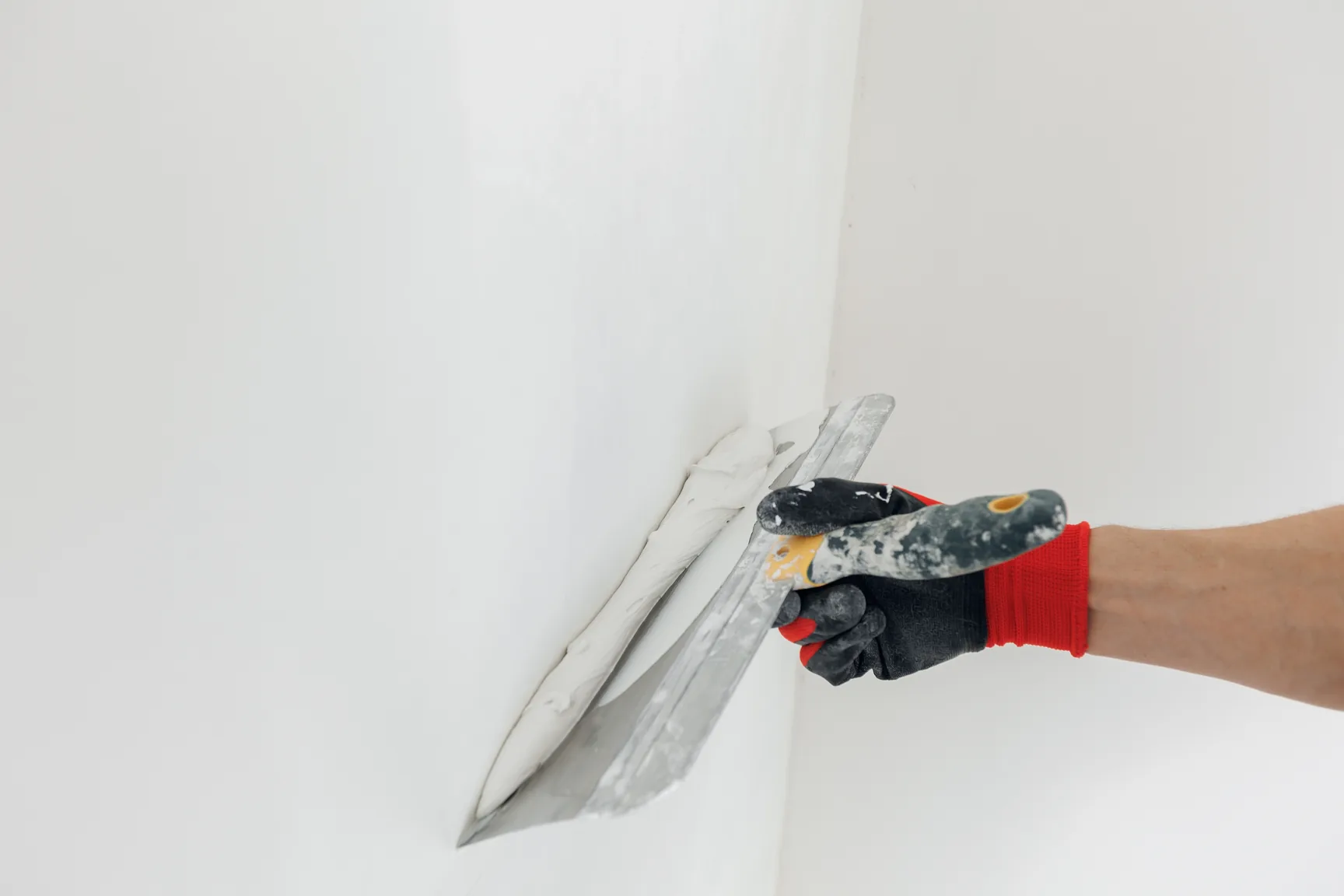
Delaware asks a drywall company to register before it works, not to pass a trade exam. The Office of Contractor Registration, Delaware Department of Labor keeps a statewide registration that every contractor and subcontractor holds before performing construction services, and the law reaches hanging, taping and repair through its own broad category words rather than by naming the trade. Paid work on older painted walls falls under a lead-safe renovation program the state runs itself through the Healthy Homes and Lead Poisoning Prevention Program, Delaware Division of Public Health. Asbestos abatement, including the disturbance of material that will crumble with handling, needs state certification, and the only exemption is for work in an owner-occupied single family dwelling performed by the owner of that dwelling. Workers’ compensation is compulsory from the first employee and is met in the private market or through self-insurance, because there is no state fund to buy it from.
Each finding has an edge a busy owner can miss: a business license is not the registration, and a homeowner’s exemption does not pass to a crew the owner hires. The sections below give each finding as verified, in the source’s own words where they carry the point.
How the policies themselves work for a drywall company is set out on the drywall contractor insurance page and the coverage pages it links to. This page stays with what is particular to Delaware, whether your crews patch and refinish rooms in occupied homes, which the residential drywall contractor insurance page covers, or hang and finish board on a general contractor’s project, the subject of the commercial drywall contractor insurance page.
A hub with spokes. At the center is a drywall company’s contractor registration in Delaware. A spoke labeled issued and enforced by runs to the registration office inside the state labor department, which administers the law. A spoke labeled the work it reaches runs to building, remodeling and repair work: the law reaches drywall through those category words and never names the trade. A spoke labeled subs register too runs to subcontractors at every tier, which the law’s meaning of contractor takes in. A spoke labeled comp proof on the application runs to proof of Delaware workers’ compensation insurance. A spoke labeled a tax license shown with it runs to the revenue division’s business license, which is tied to a tax on gross receipts and is not a trade credential. A spoke labeled a safety plan filed with it runs to a written plan that meets federal workplace safety requirements. A spoke labeled kept current or lost runs to renewal, since the department can deny, suspend or revoke a certificate. No figures are shown.
Registering with the labor department before the first sheet goes up
Delaware reaches drywall work through a statewide registration, not a license by examination. The Delaware Contractor Registration Act requires every contractor, subcontractors included, to register with the Delaware Department of Labor before performing construction services or maintenance, and its definition of construction services takes in all building or work on a building, structure or improvement of any type. The Act never names drywall; hanging, finishing and repairing walls and ceilings are work on a building, and the Department’s own guidance lists remodeling among the services that need registration.
A drywall company, whether it contracts with the owner or works under another contractor, registers with the Office of Contractor Registration before the job starts and renews the certificate before it lapses. The application asks for proof of Delaware workers’ compensation insurance, proof of a state business license and a safety plan that meets federal workplace safety requirements, and the Department can deny, suspend or revoke a certificate. Separately, the Division of Revenue issues every contractor a business license under the State Taxes title of the Delaware Code, tied to a tax on gross receipts; that is a tax license, not a trade credential.
Authority: 19 Del. C. §§ 3601, 3602(1), (2), (5), 3603, 3604, 3605(b)(6)–(8); 30 Del. C. § 2502(a), (c)(1)
The duty itself is a short sentence in the registration law, tied to the start of the work:
“A contractor must register under this chapter before performing construction services or maintenance.”
The law’s definition of a contractor closes with words aimed squarely at the subcontractor:
“and includes any subcontractor or lower tier subcontractor of a contractor.”
What counts as construction services is drawn wide. The definition opens with building of every kind before it turns to bridges and highways:
“includes all building or work on a building, structure, or improvement of any type, including bridges, dams, plants, highways …”
The Act’s own words decide the reach. A contractor is any business that engages in construction services or maintenance for another for profit within the State, and includes any subcontractor; construction services include all building or work on a building, structure or improvement of any type; maintenance is the repair of existing facilities without enlarging them. Hanging, taping, finishing and repairing wallboard and plaster is work on a building, and patching existing walls is repair, so the registration reaches drywall work by these category words. The Act names no trade: drywall, plaster, wallboard and gypsum appear nowhere in it, and the record does not say they do. It is a registration: the Act asks for forms, information, fees, insurance and a safety plan, and sets no examination.
A registration asks for paperwork rather than an exam, and insurance is among the papers:
“Proof of Delaware worker’s compensation insurance.”
The application also asks for proof of a state business license, and owners new to Delaware sometimes take that license for the credential itself. The law’s own words show why it is not. It sits in the state’s tax law, under a chapter on contractors’ license requirements and taxes, and it is tied to a tax on gross receipts:
“Any person desiring to engage in business in this State as a contractor shall obtain a license upon making application to the Division of Revenue …”
That is a tax license, not a trade credential, and the registration asks for proof of it rather than standing in for it. As advice, when a general contractor asks for your Delaware contractor credential, send the registration certificate, and keep its renewal date on the same calendar as your comp policy dates so a lapse in one does not catch you while the other is current.
Health division certification for paid work on older paint
Delaware runs its own lead-safe renovation program. EPA has authorized the state to operate the renovation, repair and painting (RRP) program, and the Division of Public Health certifies renovation firms and renovators under the state’s Residential Property Renovation, Repair and Painting rule, which makes it unlawful for a firm to perform renovations in target housing or child-occupied facilities without the state’s certification.
Authority: 16 DE Admin. Code 4459B, §§ 1.1, 1.4.2, 1.4.3; 40 CFR Part 745
A crew cutting out a damaged section, opening a wall for a doorway or sanding a patch flush with the finish around it is disturbing whatever paint is on that wall. The state rule says which of those jobs it reaches, and payment is the trigger:
“These regulations apply to all renovations performed for compensation in target housing and child-occupied facilities.”
It also says what a firm may not do without the state’s certification:
“it shall be unlawful for any firm to perform, offer, or claim to perform renovations in target housing or child-occupied facilities without certification from the Secretary under Section 7.0”
The Healthy Homes and Lead Poisoning Prevention Program, Delaware Division of Public Health describes the duty in its guidance for contractors:
“Delaware law requires contractors that disturb painted surfaces in homes, child care facilities and schools built before 1978 to be certified and follow specific work practices to prevent lead contamination.”
A drywall firm paid to cut, patch or tear out painted walls and ceilings in older homes, child care facilities or schools holds a Delaware firm certification, has the work directed by a state-certified renovator, follows the rule’s work practices and gives occupants the lead hazard pamphlet before work begins. An EPA certification held when the state took over was honored only until it expired; after that the firm applies to the Division of Public Health.
The practical point is the last sentence of that finding: on a Delaware job, the firm certification that counts is the state’s. As advice, settle a few questions before an estimate on an older building is final. When was the building put up? Is it a home, a child care facility or a school? Which certificate does your firm hold, who issued it and when does it lapse? And who on the crew is the state-certified renovator directing the work?
How a liability policy treats a claim that involves lead or another contaminant is a separate question, taken up on the general liability page.
Friable, soon to be friable, and the tear-out in between
Delaware’s asbestos law and its certification rule reach drywall tear-out through their categories rather than by naming drywall. No contractor may undertake asbestos abatement without state certification, and abatement covers construction, alteration, repair, maintenance, demolition or renovation of structures that contain asbestos, and the disturbance of friable material or of nonfriable material that will become friable with handling. The Division of Facilities Management certifies abatement contractors, supervisors and workers; the Department of Natural Resources and Environmental Control enforces the law and takes renovation notifications. The department’s own guidance lists plaster and joint compound among materials where asbestos is found.
Authority: 16 Del. C. §§ 7802(2), (5), 7803(a), 7806; 19 DE Admin. Code 4103, §§ 3.0, 5.1; 7 DE Admin. Code 1121, § 10.1; 40 CFR Part 61, Subpart M
This finding is the likeliest to change how a drywall job is done, because the law is written around what the work does to a material, not the material’s trade name. Its core duty is short:
“No contractor or asbestos worker shall undertake any asbestos abatement work without having first been certified in accordance with this chapter.”
What counts as asbestos abatement is where drywall work comes in. The law’s definition includes the ordinary run of renovation:
“Construction, alteration, repair, maintenance, demolition or renovation of structures, substrates or any portions thereof, that contain asbestos;”
The certification rule reaches material that crumbles and material that does not crumble yet but will once a crew starts working on it, and it sets out its exception for homes in the same breath:
“the disturbance of friable asbestos or cementitious asbestos-containing material or the disturbance of non-friable material that will become friable with handling, except for work in an owner occupied single family dwelling performed by the owner of such dwelling.”
The law’s and the rule’s own words decide the reach, and none of them names joint compound, wallboard, gypsum board, drywall or plaster. They reach that material through categories: abatement includes alteration, repair, maintenance, demolition or renovation of structures that contain asbestos, and the disturbance of friable material, which hand pressure can crumble, or of nonfriable material that will become friable with handling; removal includes stripping asbestos material from ceilings and interior sidewalls. Sanding, cutting or tearing out an old finish is the kind of disturbance those words describe. The department’s guidance page is where plaster and joint compound are named, as examples of where asbestos is found; that is guidance, not the text of the rule. The only exemption in the certification rule is work in an owner-occupied single family dwelling performed by its owner, so a hired contractor working in a house is not exempt.
The Delaware Department of Natural Resources and Environmental Control publishes guidance on where asbestos turns up, and that guidance, not the law or the rule, is where finishing materials are named. Among its examples is an entry that reads like a finisher’s job description:
“Plaster and joint compound”
Its renovation guidance describes what follows when an inspection finds asbestos the work will disturb. That, too, is guidance:
“If asbestos is found during the inspection and will be disturbed during any renovation or repair work, it must be properly removed and disposed of at an approved disposal facility.”
Before a drywall crew opens up older walls or ceilings, the material is inspected by a state-licensed asbestos inspector; if asbestos is found and the work will disturb it, a state-certified abatement contractor removes it, and the owner or operator gives the department notice before regulated renovation work starts. The certification rule exempts only work in an owner-occupied single family dwelling done by the owner of that dwelling.
The homeowner’s own exemption stops at the hired crew
The certification rule carries a single exemption for homes, and the Office of Management and Budget, Division of Facilities Management, which certifies abatement contractors, supervisors and workers, writes it this way:
“Any public or private asbestos abatement project, except for work in an owner-occupied single family dwelling performed by the owner of such dwelling, shall be performed by a contractor and/or contractors who have been certified by Facilities Management.”
Read the exemption word by word. The home has to be owner-occupied. It has to be a single family dwelling. And the work has to be performed by the owner of that dwelling.
A drywall company hired to do the work is not the owner. Nothing in the rule extends the owner’s exemption to the people the owner pays, so on a hired job in a house the certification requirement applies as it would in an office. As advice, say so plainly when a homeowner suggests otherwise, before the crew arrives.
As advice, ask for the inspection results on any older building before you price a tear-out, and if asbestos will be disturbed and your company is not certified, schedule a certified abatement contractor ahead of your crew. Whether a liability policy responds to a claim involving asbestos is taken up on the general liability page.
An insured payroll, and the uninsured sub that becomes yours
Workers’ compensation is compulsory in Delaware for the employers its law covers, which the statute defines by any employment with even a single employee. A covered employer either insures with an insurer authorized to write the coverage in Delaware and approved by the Department of Labor or proves to the Department that it can pay benefits directly. There is no state fund to buy from; coverage comes from the private market or self-insurance.
Authority: 19 Del. C. §§ 2306(a), 2308(b), 2311(a), 2371(a), 2372(a), 2396(a)
The law’s reach is set in its opening provisions, and the threshold is as low as a payroll can go:
“Except as otherwise indicated, this chapter shall apply to the employer and employee in any employment in which 1 or more employees are engaged.”
The statute then gives an employer a choice of routes. The first is a policy from an insurer the state has approved and authorized for this line:
“shall insure and keep insured the employer’s liability for compensation in some corporation, association or organization approved by the Department and authorized to transact the business of workers’ compensation insurance in this State”
The second is carrying the risk directly, with the department satisfied the business can pay:
“or shall furnish to the Department satisfactory proof of the employer’s financial ability to pay directly the compensation”
A drywall contractor with employees keeps a Delaware policy in force from the first day of work, and the same proof of coverage is part of its contractor registration. Sole proprietors and partners are outside the law unless they elect coverage, but the statute treats contractors and subcontractors as employers of their workers and makes a contracting business answer for the coverage of an uninsured subcontractor it hires without collecting a certificate.
The provision behind the last part of that finding concerns everyone who hires anyone else to do part of a job:
“Any contractor or subcontractor shall be deemed to be an employer.”
Drywall crews are often assembled from several businesses, with hangers on the company’s own payroll and a taping crew brought in from another business. That arrangement is exactly where the law places the risk on the business that hires without checking. As advice, collect a certificate from every company that sends people to your jobs, check that its dates cover the work, and keep it in the job file. How crews paid by the board, the foot or the job are treated is a policy question rather than a Delaware one, and it is set out on the workers’ compensation page.
The desk each certificate and notice lands on
The Delaware Department of Insurance regulates insurance in the state. You can look up an insurance agency’s license, ours included, on NIPR.com.
The other state offices this page draws on each hold a separate piece of the picture. Each link goes to the office’s own site, and each role is described as the record verified it:
- Office of Contractor Registration, Delaware Department of Labor: registers every contractor and subcontractor performing construction services or maintenance, drywall work included
- Healthy Homes and Lead Poisoning Prevention Program, Delaware Division of Public Health: state-run lead renovation, repair and painting program: certifies firms, renovators and training providers and enforces the lead rules
- Office of Management and Budget, Division of Facilities Management: certifies asbestos abatement contractors, supervisors, workers, inspectors and professional service firms
- Delaware Department of Natural Resources and Environmental Control: state environmental agency; enforces the asbestos law and takes asbestos renovation and demolition notifications
- Office of Workers’ Compensation, Delaware Department of Labor: administers and enforces the workers’ compensation law, coverage verification and self-insurance; claims are heard by the Industrial Accident Board
Notice how the work divides: asbestos certification and asbestos enforcement sit in different departments. As advice, send each question to the office that holds it.
Where the certificate goes to work: metros from the Census file
The metro areas below are the metropolitan areas with a principal city in Delaware, as the U.S. Census Bureau delineates them. The registration is statewide, so the same certificate goes with a crew into each of them.
Philadelphia-Camden-Wilmington, PA-NJ-DE-MD
This metro reaches beyond Delaware, and this card names only its Delaware counties: New Castle County.
Dover, DE
Delaware counties in this metro: Kent County.
As advice, a crew that works both sides of a state line meets the Delaware registration on this side and the neighboring state’s rules on the other, so note which state each job sits in before the bid goes out.
What to insure once the certificate is on the wall
The findings above tell you where Delaware’s rules sit. The coverage that answers for the work itself is the set of policies a drywall company carries wherever it works, and each has its own page:
- General liability for injury and damage to others, including how finished work and tear-out are treated.
- Workers’ compensation for the crew, the policy the registration application asks you to prove.
- Commercial auto for the vans and trucks that carry board, mud and lifts from the supply yard to the job.
- Inland marine coverage for tools and equipment for the lifts, taping tools and sanders that travel from job to job.
- Umbrella liability for limits above the primary liability policies, often asked for in a general contractor’s subcontract.
- Commercial property for the shop and what is kept in it.
Which of those matter most depends on whether your crews repair walls in occupied homes or hang board on general contractors’ projects, and the service pages take each on its own terms. When you are ready to put the pieces together for Delaware work, a quote request is the place to start.
State rules decide who may do the work and how; the policies decide who pays when something goes wrong.
- A license, registration or certification is a requirement of the state, not insurance.
A panel for Delaware in rows. Each row sets a requirement of the state beside the exposure that requirement leaves open and the coverage line that answers it. Contractor license: A state license or registration reaches drywall work. It leaves open injury and damage to others from the work, during the job and after it, which General Liability answers. Lead-safe renovation: The state runs its own lead-safe renovation program. It leaves open paint dust disturbed when older walls are cut, patched or sanded, which General Liability answers. Asbestos in wall and ceiling material: A state program reaches removal of this material. It leaves open disturbing older joint compound, wallboard or plaster, which General Liability answers. Workers’ compensation: Required for covered employers, bought in the open market. It leaves open a crew member hurt on the job, which Workers’ Compensation answers. Notes: A license, registration or certification is a requirement of the state, not insurance. The conclusion reads: State rules decide who may do the work and how; the policies decide who pays when something goes wrong. No figures are shown.
Nearby states we also write
Delaware coverage, services and state offices
What we insure
Coverage lines
Outside authorities
- Delaware Department of Insurance
- Office of Contractor Registration, Delaware Department of Labor
- Delaware Department of Natural Resources and Environmental Control
- Office of Management and Budget, Division of Facilities Management
- Office of Workers’ Compensation, Delaware Department of Labor
- Healthy Homes and Lead Poisoning Prevention Program, Delaware Division of Public Health
Delaware drywall contractor insurance questions
We only ever work as a sub to general contractors. Does our company still need a Delaware registration of its own?
Yes. The registration law’s meaning of a contractor takes in any subcontractor or lower tier subcontractor of a contractor, and a contractor registers before performing construction services or maintenance. The Office of Contractor Registration, Delaware Department of Labor administers that registration. As advice, expect a general contractor to ask for your certificate before your crew starts, and keep a copy in every job file.
Our business license from the state is current. Isn’t that the same thing as the contractor registration?
No. The business license comes from the state’s revenue division under its tax law and is tied to a tax on gross receipts; it is a tax license, not a trade credential. The contractor registration is separate, and its application asks for proof of that business license along with proof of Delaware workers’ compensation insurance and a safety plan.
What does the registration application ask us to show before it is approved?
Proof of Delaware workers’ compensation insurance, proof of a state business license and a safety plan that meets federal workplace safety requirements. There is no examination. The Office of Contractor Registration, Delaware Department of Labor can deny, suspend or revoke a certificate, so as advice, put the renewal date on the office calendar the day the certificate arrives.
The state took lead-safe renovation over from the federal agency. What happened to firm certificates issued before that?
They counted only until they expired. Delaware runs its own renovation, repair and painting program, and a federal certification held when the state took the program over was honored only until it expired. After that, the firm applies to the Healthy Homes and Lead Poisoning Prevention Program, Delaware Division of Public Health, which certifies renovation firms and renovators in the state.
Does the asbestos rule treat a house differently from an office building when we are hired to tear out a ceiling?
Not for a hired crew. The certification rule says any public or private asbestos abatement project is performed by a certified contractor, except for work in an owner-occupied single family dwelling performed by the owner of that dwelling. A contractor the owner hires is not the owner, so if asbestos will be disturbed, a contractor certified by the Office of Management and Budget, Division of Facilities Management does the abatement.
Who has to tell the state before a renovation that will disturb asbestos?
The owner or operator gives the Delaware Department of Natural Resources and Environmental Control notice before regulated renovation work starts, and that department enforces the asbestos law. As advice, ask the building owner or the general contractor whether the notice has gone in before your crew opens a wall on an older building.
I run the company by myself and have nobody on the payroll. Where do I stand under the comp law?
Sole proprietors and partners are outside the comp law unless they elect coverage. The registration application still asks for proof of Delaware workers’ compensation insurance, so as advice, ask the Office of Contractor Registration, Delaware Department of Labor what it accepts from a business with no employees before you apply, and revisit the question the day you hire.
The finishing crew we brought in had no comp policy of its own. Where does that leave our company?
Exposed. The statute treats contractors and subcontractors as employers of their workers and makes a contracting business answer for the coverage of an uninsured subcontractor it hires without collecting a certificate. As advice, collect the other company’s certificate before its crew arrives, and check that the policy is in force for the dates of the job.
This page describes insurance for drywall contractors operating in this state. It is general information, not legal advice and not a statement of coverage. Licensing, lead-safe and asbestos requirements change; verify current requirements with the agency named before relying on them.
Get a quote for your Delaware drywall work
Tell us whether you work for owners or under general contractors, how old the walls your crews open tend to be and who is on the payroll, and we will build the program around your registration.